

India is a place that defies neat descriptions. It’s vibrant, chaotic, soulful, and layered with more stories than one blog post could ever capture. From the cacophony of horns to the historical grandeur of the Mughal dynasty, every moment here is alive with contrasts.
Take the roads, for example. Driving in India is its own kind of performance art. And here’s a fun fact: it’s considered rude not to honk your horn before passing a vehicle. Honking is less about aggression and more about communication—a polite “Namaskar” to let others know you’re coming through. Trucks often display signs like “Blow Horn” or “Use Dipper at Night,” making it clear that honking isn’t just tolerated—it’s expected. It’s noisy, yes, but it’s also strangely efficient in its own chaotic way.
Reading the Roads: A Crash Course in Indian License Plates
One of the first things I noticed during my time here was the kaleidoscope of vehicle registration plates. Each tells a little story about where the vehicle comes from and its purpose:
• Yellow Plates: Commercial vehicles—taxis, trucks, and buses hustling to their next destination.
• White Plates: Private vehicles, carrying families, professionals, and everyday life.
• Green Plates: Electric vehicles—a hopeful sign of sustainability amidst the bustling chaos.
• DL: Vehicles registered in Delhi.
• RJ: Rajasthan, for those that call the majestic desert state home.
Every plate is like a postcard from a different corner of India, a reminder of how vast and diverse this country is.
The Streets Are Alive
India’s streets are more than just thoroughfares—they’re stages where life unfolds in all its raw beauty. Children play in the middle of the road, darting between cars and laughing with uncontainable joy. Others wash windows at traffic lights or paint gutters with a focus that’s both industrious and surreal. It’s a scene that tugs at your heartstrings, reminding you of the resilience and creativity that thrive even in the midst of challenges.
Tastes of Tradition: Semolina and Chickpea Flour
The food here is an adventure in itself, and my taste buds are having the time of their lives. Indian cuisine has a way of turning the simplest ingredients into something extraordinary. Take semolina and chickpea flour, for example. These humble staples are transformed into delicacies like soft, spongy dhokla or crispy, golden pakoras. It’s a reminder that in India, food isn’t just nourishment—it’s art, tradition, and a celebration of flavor.
A Glimpse into History: The Qutb Monuments and the Mughal Dynasty
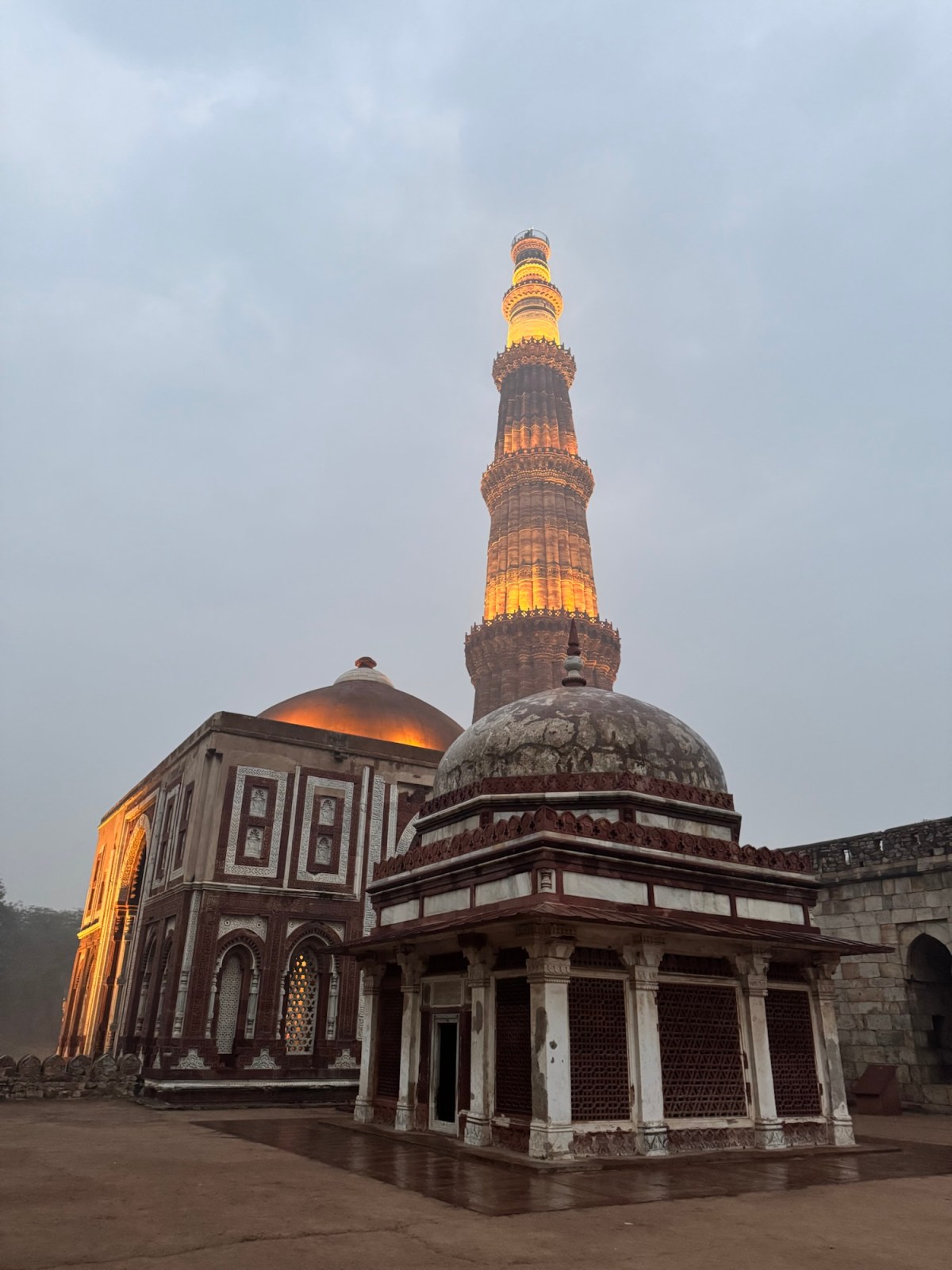
India’s history is as rich and layered as its food. Exploring the Qutb Minar Complex in Delhi, I found myself awestruck by the scale and intricacy of these ancient structures. The Qutb Minar, a towering sandstone minaret built in 1193, rises like a sentinel over centuries of history. The surrounding ruins, including the Quwwat-ul-Islam Mosque, tell stories of conquest, faith, and architectural brilliance.
This is the legacy of the Mughal dynasty, whose influence can still be felt in everything from India’s cuisine to its art and architecture. Walking through these monuments, it’s impossible not to feel a sense of reverence for the grandeur and ingenuity of those who came before us.
Finding Balance in the Chaos
India has a way of throwing you off balance—and then teaching you how to find your footing again. It’s in the blaring horns that somehow create order from chaos, the children who turn busy streets into playgrounds, the food that speaks of centuries-old traditions, and the monuments that whisper stories of a time long gone.
Travel here isn’t always comfortable, but it’s always meaningful. It demands that you stay present, that you open yourself to the unfamiliar, and that you find beauty in the mess. India doesn’t just show you the world—it shows you yourself, reflected in its vibrant, unfiltered mirror.
So, if you find yourself here one day, listen for the horns, taste the pakoras, marvel at the history, and let the chaos guide you to something extraordinary. Namaskar, my friends—welcome to the journey.

 The Balanced Equation