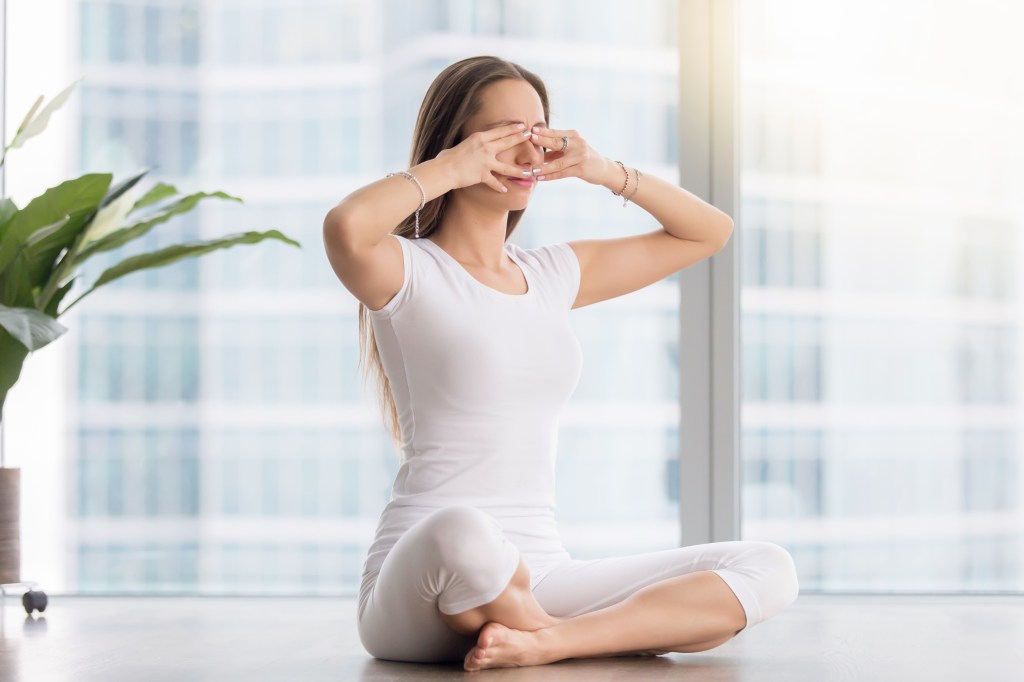
When Life Sends You Sideways

It’s been a long time between posts.

And not the kind of “life got busy” pause — but the kind of full-body halt that comes when life flips your world upside down and knocks the breath clean out of you.

A Dream Realised… Briefly

At the start of 2025, I finally did it — I boarded a flight to India for a long-awaited adventure with Camel Treks Australia. It had been years in the making. I was craving wide skies, desert stillness, shared stories, and soul-deep restoration.

For a while, it was all that and more.

But life doesn’t always follow the plan.

A Message at 4am

I had barely touched back down on Australian soil when everything changed.

Jet-lagged, disoriented, and still holding the scent of incense and dust, I checked my phone at 4am. A message was waiting from my partner of 2.5 years — a man I love deeply, who knows me in both stillness and storm. The message simply read:

“Are you awake?”

Something in me braced. My reply was quick.

His answer came faster — and chilled me to my core:

“I’ll be with you whatever happens. But there’s been an accident. I’ve heard something’s happened — you need to call the police and find out what hospital they’ve been taken to.”

My heart dropped.

The Unfolding

My son and my ex-husband — my life partner for 30 years and the father of my children — had been in a horrific car accident. Both were critically injured. Both were fighting for their lives.

What followed was a surreal blur: hospitals, emergency teams, burns units, and the heavy silence that fills the space between questions no one can answer.

Within a fortnight, my ex-husband succumbed to his injuries and passed away on my 55th birthday.

The complexity of that grief is hard to name. This was someone I once loved, built a life with, raised children with. Our paths had long diverged, but the roots ran deep. His death marked the end of an era I hadn’t realised was still quietly shaping me.

Holding Death in Both Hands

I’ve been here before — near death’s edge. I’ve walked alongside it during illness, felt its breath on my neck through my own near-death experiences, and sat vigil with loved ones as they crossed over.

Death, to me, has never been a stranger. It is a powerful, mysterious teacher — one that strips away the unnecessary and leaves only what matters.

But this time… it asked more of me. It pulled at my roles as mother, as former wife, as woman, as witness — and forced me to sit with all the tangled pieces.

The In-Between

In the weeks and months that followed, I stepped back. From the blog. From work. From almost everything.

I poured my energy into being there for my son, into finding a path forward, into grieving with honesty and gentleness. I went quiet — not because I had nothing to say, but because there were no words wide enough to hold it all.

And Now

I’m not who I was at the beginning of this year.

Something in me has softened. Other parts have sharpened. I feel more grounded, more awake, more certain of what really matters.

This isn’t a return to blogging as usual. It’s a continuation — from where I now stand, in the middle of the mess and the meaning, still choosing to tell the truth, still choosing to grow.

Thank you for your patience, your presence, and for being part of this space — one that holds not just the light, but also the shadow, the mystery, and the unexpected turns that come with living a fully human life.

More soon — from the heart.

From Delhi to Agra: Elephants, Love Stories, and Two Highway Pit Stops

The Yamuna Expressway is less a highway and more an unscripted Bollywood drama—tractors, cows, and helmet-free bikers vying for space while sacred cows judge the chaos from the sidelines. Our journey to Agra included not one, but two memorable pit stops: a pricey latte at Highway Masala (worth it for the clean restroom alone) and a Butter Paneer Burger at McDonald’s that redefined fast food. But the real highlight was the Elephant Conservation and Care Centre, where majestic giants, once abused, now thrive in peace. Add a glittering Taj Mahal love story performance to the mix, and you’ve got a day as unforgettable as it was chaotic.

Our day began in Delhi with a warm and hearty breakfast at Prakash Kutir, where Ajay and Savita’s hospitality could convince anyone to stay forever. But the road to Agra beckoned, promising elephants, a taste of history, and adventures along the way.

The Yamuna Expressway: A Highway of Contrasts

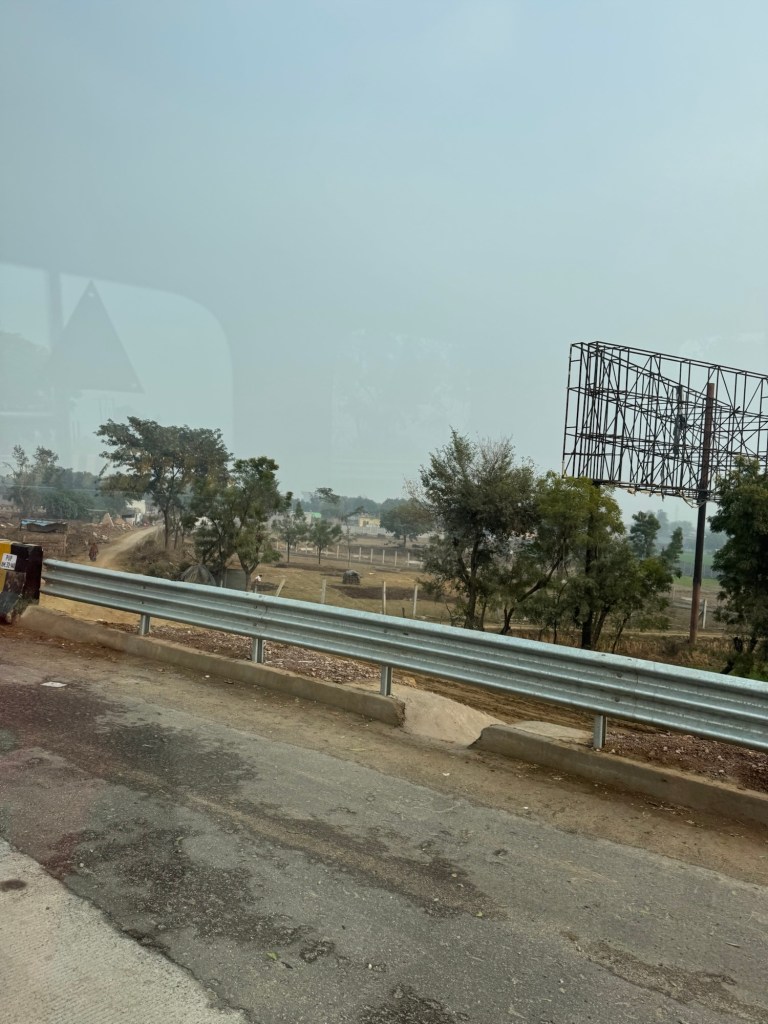
Part of the Yamuna Expressway

The Yamuna Expressway is less a highway and more an unscripted drama. Tractors share lanes with speeding cars, helmets and seatbelts are treated as optional, and sacred cows amble about as if they own the place (they probably do). The roadside scenery is an ever-changing slideshow of paddock cricket matches, brick kilns, and rubbish that stretches endlessly. There was even a dead dog and more than one abandoned bicycle—because why not add a little mystery to the mix?How did that dog die? I find myself wondering. It did not look like he’d been run over, possibly malnourishment or exhaustion I suspect.

Our first stop was Highway Masala, a roadside haven where I indulged in a latte that cost 335 rupees ($6.33 after tax and tip). Pricey, yes, but after a morning of visual chaos, it was worth every penny. Karen, our ever-resourceful guide, tipped the restroom attendant generously, ensuring we all got to freshen up in clean, civilized conditions—a rare and much-appreciated treat on this journey.

Back on the road, the conversations in the bus merged into a pleasant hum as we passed Mathura’s signature brick-making kilns and teenagers playing cricket on any patch of dirt they could find. My travel thoughts turned contemplative, but hunger soon pulled me back into the moment.

Lunch at McDonald’s: A Quick Bite Before the Elephants

With the Elephant Conservation and Care Centre (ECCC) as the day’s highlight, Karen, ever mindful of the clock, opted for a no-nonsense lunch at McDonald’s. This was not McDonalds as we knew it in Australia; this was India, and I embraced it wholeheartedly by ordering a Butter Paneer Burger (despite the fact I avoid McDonald’s and any fast food ordinarily). Equal parts spicy, buttery, and satisfying, it felt like a tiny triumph of Indian flavor over fast food uniformity.

The quick meal allowed us to stay on schedule while fueling up for what we all knew would be the most impactful part of the day—the visit to the elephants.

Elephant Conservation and Care Centre (ECCC): A Sanctuary of Second Chances

An impactful presentation…why this work is so important.

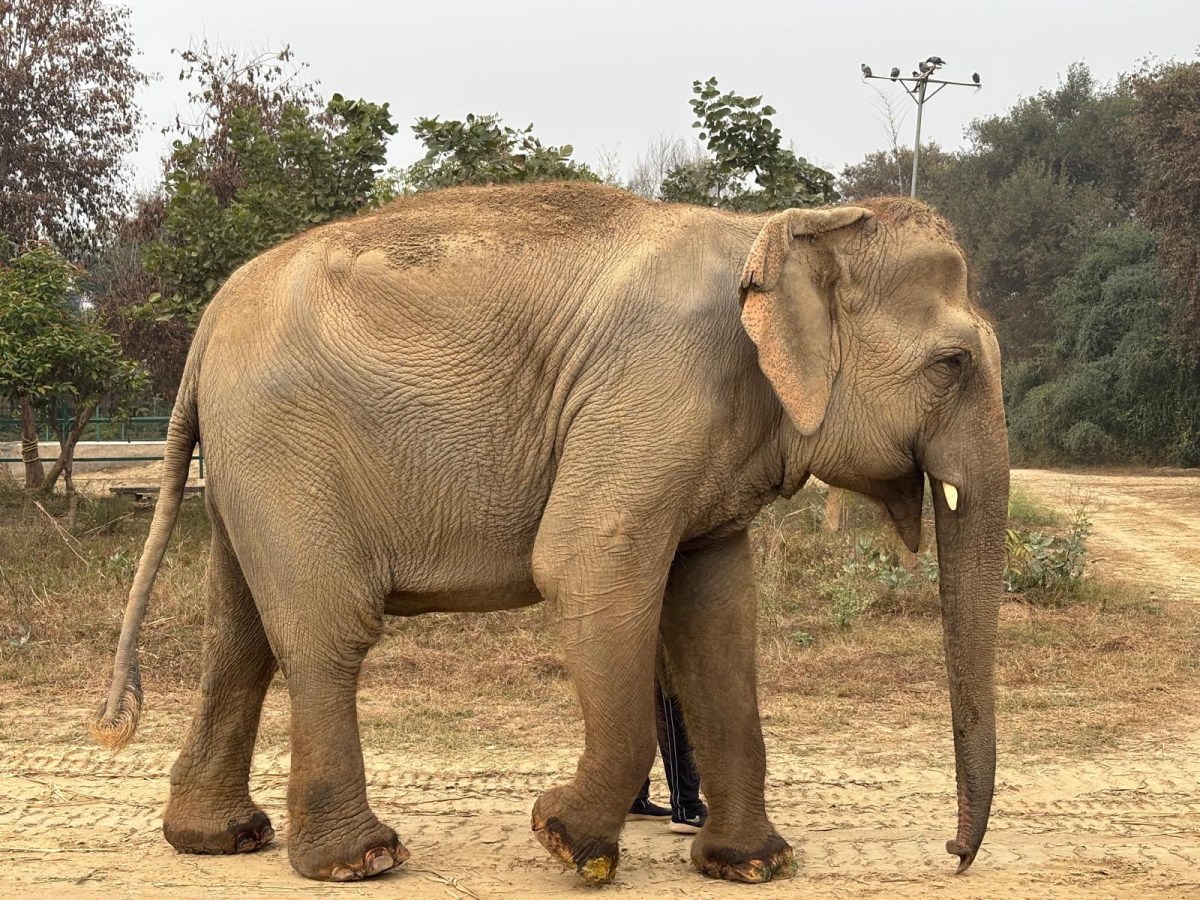
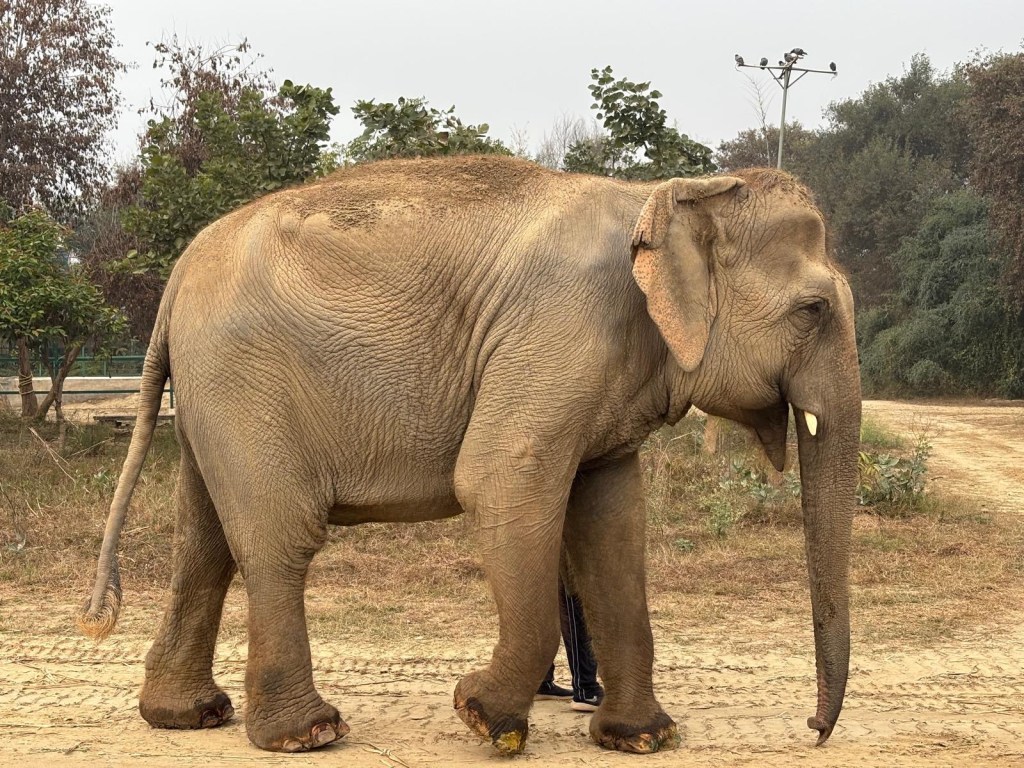
Mathura brought us to the ECCC, a sanctuary dedicated to rescuing and rehabilitating abused and exploited elephants. Here, these majestic animals are given a second chance at life, free from the chains—both literal and figurative—that once bound them. Each elephant has a story, and hearing them is equal parts heartbreaking and hopeful. The presenter was exceptional. What is most impressive is the centre’s focus on rehabilitating the elephants owners and family as well in order to break the cycle altogether.

The chains that once bound…

Mia, who spent decades performing in circuses and was often starved and beaten had arrived at the centre in a state of abject physical and mental distress. Now she spends her days basking in the sun, playing in the mud, and eating nourishing food alongside her BFF Rhea. Learning about the abuse these elephants endured and seeing their transformation into happier, healthier creatures was a humbling experience that left us all a little more compassionate—and a lot more aware.

https://wildlifesos.org/

Mia aged 52 – note her poor feet needing continued treatment as a result of abuse suffered before being rescued.

Agra: Love, Lights, and a Bit of Contemplation

As we arrived in Agra, the chaotic energy of the day gave way to the serene charm of Da Bungalow, a retreat that combines modern comfort with traditional Indian aesthetics.

The evening took us to the Agra Mohabbat The Taj Show, a glittering spectacle that brought the love story of Emperor Shah Jahan and Mumtaz Mahal to life. With its vibrant costumes, entrancing music, and heartfelt performances, it was the perfect way to end a day that had already felt larger than life.

Reflections on the Journey

As we made our way back to Da Bungalow, the chatter of the group softened, and my thoughts drifted to the changes awaiting me back home. My house is on the market, with a buyer viewing it tomorrow morning. Will my next chapter take me to another town? Or, will I stay in the town I’ve come to love. These questions hung in the air, unanswered but oddly comforting in their ambiguity.

For now, I am content to let the answers come in their own time. Tomorrow, the Taj Mahal awaits. If it’s even half as spectacular as the Butter Paneer Burger, I’ll call it a win. For today, I’m just grateful for elephants, clean restrooms, and the magic of being present on this wild, wonderful journey.

Namaskar from India: Navigating Chaos, Culture, and Curiosity

India is a place that defies neat descriptions. It’s vibrant, chaotic, soulful, and layered with more stories than one blog post could ever capture. From the cacophony of horns to the historical grandeur of the Mughal dynasty, every moment here is alive with contrasts.

Take the roads, for example. Driving in India is its own kind of performance art. And here’s a fun fact: it’s considered rude not to honk your horn before passing a vehicle. Honking is less about aggression and more about communication—a polite “Namaskar” to let others know you’re coming through. Trucks often display signs like “Blow Horn” or “Use Dipper at Night,” making it clear that honking isn’t just tolerated—it’s expected. It’s noisy, yes, but it’s also strangely efficient in its own chaotic way.

Reading the Roads: A Crash Course in Indian License Plates

One of the first things I noticed during my time here was the kaleidoscope of vehicle registration plates. Each tells a little story about where the vehicle comes from and its purpose:

• Yellow Plates: Commercial vehicles—taxis, trucks, and buses hustling to their next destination.

• White Plates: Private vehicles, carrying families, professionals, and everyday life.

• Green Plates: Electric vehicles—a hopeful sign of sustainability amidst the bustling chaos.

• DL: Vehicles registered in Delhi.

• RJ: Rajasthan, for those that call the majestic desert state home.

Every plate is like a postcard from a different corner of India, a reminder of how vast and diverse this country is.

The Streets Are Alive

India’s streets are more than just thoroughfares—they’re stages where life unfolds in all its raw beauty. Children play in the middle of the road, darting between cars and laughing with uncontainable joy. Others wash windows at traffic lights or paint gutters with a focus that’s both industrious and surreal. It’s a scene that tugs at your heartstrings, reminding you of the resilience and creativity that thrive even in the midst of challenges.

Tastes of Tradition: Semolina and Chickpea Flour

The food here is an adventure in itself, and my taste buds are having the time of their lives. Indian cuisine has a way of turning the simplest ingredients into something extraordinary. Take semolina and chickpea flour, for example. These humble staples are transformed into delicacies like soft, spongy dhokla or crispy, golden pakoras. It’s a reminder that in India, food isn’t just nourishment—it’s art, tradition, and a celebration of flavor.

A Glimpse into History: The Qutb Monuments and the Mughal Dynasty

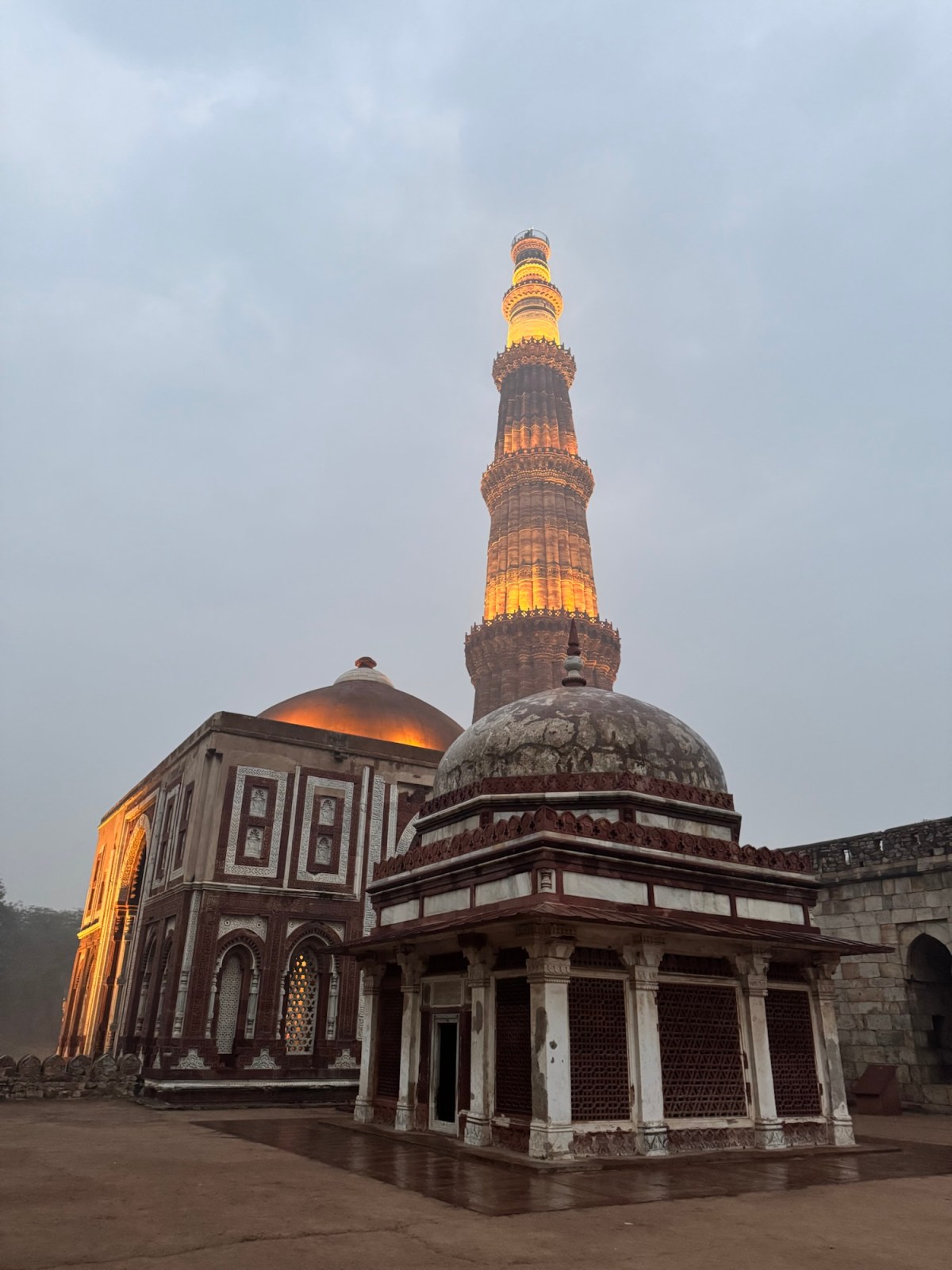
India’s history is as rich and layered as its food. Exploring the Qutb Minar Complex in Delhi, I found myself awestruck by the scale and intricacy of these ancient structures. The Qutb Minar, a towering sandstone minaret built in 1193, rises like a sentinel over centuries of history. The surrounding ruins, including the Quwwat-ul-Islam Mosque, tell stories of conquest, faith, and architectural brilliance.

This is the legacy of the Mughal dynasty, whose influence can still be felt in everything from India’s cuisine to its art and architecture. Walking through these monuments, it’s impossible not to feel a sense of reverence for the grandeur and ingenuity of those who came before us.

Finding Balance in the Chaos

India has a way of throwing you off balance—and then teaching you how to find your footing again. It’s in the blaring horns that somehow create order from chaos, the children who turn busy streets into playgrounds, the food that speaks of centuries-old traditions, and the monuments that whisper stories of a time long gone.

Travel here isn’t always comfortable, but it’s always meaningful. It demands that you stay present, that you open yourself to the unfamiliar, and that you find beauty in the mess. India doesn’t just show you the world—it shows you yourself, reflected in its vibrant, unfiltered mirror.

So, if you find yourself here one day, listen for the horns, taste the pakoras, marvel at the history, and let the chaos guide you to something extraordinary. Namaskar, my friends—welcome to the journey.

Travel for Self-Exploration: A Walk, A Tuk Tuk, and a Bargain Henna Tattoo

There’s something about stepping into a foreign country that forces you to take a good, hard look at yourself. Maybe it’s the jarring unfamiliarity—the sights, smells, and sounds that make you acutely aware of how far you are from your comfort zone. Or maybe it’s the unexpected moments, the small but profound ones, that reveal parts of yourself you didn’t even know needed revealing. Either way, travel has a way of turning introspection into a full-time hobby.

Even though I’m here in India with two incredible women and part of a lively 12-person touring group, I’ve found that travel leaves plenty of room for self-reflection. And let’s be honest—it’s not all serene meditation and moments of spiritual awakening. There’s also the “Why did I pack three pairs of shoes when I’ve only worn two?” type of realization and the “Is that Brahman cow judging me?” moment of self-awareness. Spoiler alert: it probably was.

The Morning “Getting Lost Walk”

Every holiday we take starts with the same ritual: a “getting lost walk.” It’s less about having a plan and more about wandering with the vague intention of familiarizing ourselves with the area. Today’s quest? To find a banyan tree. That’s it. Simple, right?

Well, not exactly. The banyan tree remained stubbornly elusive, but the walk rewarded us in other ways. First, there were the squirrels—dozens of them darting around, chattering, and occasionally pausing to give us what I can only describe as judgmental looks. Then, there was the lone ferret, who seemed entirely unbothered by our presence, as if ferrets in city streets were the most normal thing in the world.

And of course, there were the dogs. A veritable parade of strays in every shape and size, each with their own personality. Some trotted confidently as if they owned the streets, others lounged lazily in patches of sunlight, and one sat under a makeshift stall as if waiting for a chai latte. Amongst them were the obvious exceptions—two dogs wearing jackets advertising that they were definitely not strays. Their smug air practically screamed, “I have a family. Do you?”

To top it all off, we stumbled upon a magnificent Brahman cow lounging regally amongst a pile of rubbish down a narrow alley. There was something almost poetic about its presence—majestic and serene in the chaos of its surroundings, like a meditating monk who just happened to be surrounded by discarded plastic bottles.

The Map Said 4.5km… Lies, All Lies

Buoyed by our morning wander, we decided to take on an even bigger adventure in the afternoon: walking 4.5 kilometers to Lajpat Nagar Central Market from our bed-and-breakfast in Hauz Khas. The map made it look like a breezy stroll. Spoiler alert: it wasn’t.

Navigating the streets was like a real-life game of Frogger, dodging cars, bikes, cows, and the occasional enthusiastic honk from a passing tuk tuk. By the time we arrived, sweaty and slightly frazzled, we were questioning our decision-making skills. But the market? Worth every step. Vibrant fabrics, stunning traditional Indian clothing, and the kind of sensory overload that leaves you equal parts exhausted and exhilarated.

I even treated myself to a henna tattoo for the equivalent of AUD $4. Four dollars! At that price, I briefly considered covering my entire arm, but common sense prevailed (barely). It’s intricate, beautiful, and a temporary reminder of a day that was as chaotic as it was unforgettable.

The Tuk Tuk Ride: Chaos Meets Adventure

After three hours of market wandering (and acquiring more treasures than our bags could possibly hold), the idea of walking back was laughable. Enter: the tuk tuk.

Our driver was a magician behind the wheel, deftly navigating Delhi’s organized chaos with a mix of confidence, daring, and what I can only assume was divine intervention. We clung to the sides, laughing and shrieking as we zipped past traffic, potholes, and pedestrians. At one point, I’m fairly certain we grazed a guy on a motorbike, but neither the driver nor he seemed remotely fazed. By the time we made it back, we were windblown, exhilarated, and holding onto our market loot like victorious treasure hunters.

Packing, Repacking, and Life Lessons

Travel is a masterclass in letting go—literally and figuratively. Every morning, I repack my bag, trying to create some semblance of order. Meanwhile, one of my travel buddies spent an hour carefully reorganizing her suitcase today to make room for a traditional dress she couldn’t resist. Watching her was like watching a sculptor at work, each fold and placement deliberate. Meanwhile, I’m over here cramming scarves into every available crevice and hoping the zippers hold.

But here’s the thing: travel teaches you to strip life down to essentials. You carry what you need, and you learn to let go of the rest—whether it’s physical clutter or the mental kind that weighs you down. And isn’t that what life is all about? (Okay, maybe not the part where I bought yet another scarf, but let’s focus on the metaphor here.)

Travel: The Ultimate Mirror

Travel isn’t just about seeing new places; it’s about seeing yourself in new ways. Today’s adventures—our “getting lost walk,” the market trek, and the tuk tuk thrill ride—reminded me that the joy of travel lies in its unpredictability. It pushes you out of your comfort zone, challenges you to adapt, and forces you to laugh at the absurdity of it all.

So, here’s to the stray dogs, the regal Brahman cow, the $4 henna tattoo, and the lessons travel teaches us along the way. Here’s to tuk tuk rides that leave you breathless and moments that remind you how alive you really are. And most of all, here’s to finding joy, chaos, and clarity—one “getting lost walk” at a time.

Finding Joy in Packing Up Memories

In the chaos of post-Christmas packing, the narrator grapples with a monumental task that evokes nostalgia and emotion. Each item unearths memories, blending laughter and tears. Emphasizing small victories, the process becomes a journey of letting go and making space for future growth, ultimately finding humor and humility in the mess.

It’s just a few days after Christmas, and here I am, staring at my house like it’s a life-sized game of Tetris, with pieces I have absolutely no idea where to put. The task before me is monumental: pack up my home, get it ready for inspection, and somehow, miraculously, make it all happen before I fly to India. Simple, right? Except it’s not. Not even close.

I start the day ambitiously, tackling three spaces at once—the garage, the upstairs landing that needs painting, and my walk-in wardrobe. Rookie mistake. Within an hour, my head is pounding, my patience is gone, and my house looks more chaotic than when I started. It’s like I’ve unleashed a tornado, but instead of Dorothy and Toto, it’s me in leggings, clutching a paintbrush in one hand and an old sweater I can’t part with in the other. Honestly, even Marie Kondo would throw her hands up and walk away at this point.

I pause and do the only thing that seems remotely sane: I clear the dining room table. Just the table. One surface, one tiny victory. And it feels glorious. I can see the wood again, and for a moment, I convince myself I’ve got this. Of course, the rest of the house is still a disaster, but I decide to reward myself with something that always helps me find my footing: writing.


When Memories Hide in Clutter

As I wade through my stuff, I quickly realise this is about more than just packing. Every box I open, every drawer I rifle through, feels like opening a time capsule. There’s the top I wore on that disastrous first date. There’s my boys’ old Lego set, the one I swore I’d never step on again, and here it is, mocking me. Each item carries a memory, and with each memory comes a wave of emotion that crashes over me like an unexpected tsunami.

I try to ride the waves, but let’s be honest—it’s messy. Sometimes I laugh; sometimes I cry. Occasionally, I find myself doing both simultaneously, which must look absolutely ridiculous. But this is where I am: mid-fifties, physically fit (thankfully), and knee-deep in a task that is equal parts cleansing and chaotic. I’m grateful to have the energy to do this on my own, but let’s not romanticize it—this is hard, humbling work.


Finding Humility (and Humor) in the Mess

Something about packing up your life makes you realise how absurdly attached you are to random objects. Why am I holding onto the hideous vase a distant relative gave me in 1992? Why do I own three fondue sets when I’ve never made fondue? And why, oh why, did I think it was a good idea to start painting and packing and decluttering all at once? I have to laugh because if I don’t, I might cry again, and I’m trying to pace myself on the tears.

But I do know why I’m doing this. Letting go here, in this nurturing space that has been my home for over a decade, feels important. This house has held so much of my story, and clearing it feels like honoring the past while making room for the wonderful things I know are coming my way in 2025.

Writing gives me a chance to breathe, to step back from the chaos and make sense of it. It helps me process the emotions that rise like a tide—sometimes gentle, sometimes relentless. I remind myself that these e(motions)—energy in motion—are a natural part of clearing space. As much as I’d like to think I’m in control, the truth is, I’m just here for the ride, trying to keep my sense of humour intact.


Small Wins, Big Lessons

Clearing that dining room table taught me something important: start small. One surface, one drawer, one box at a time. It’s not about doing it all perfectly or all at once. It’s about finding those little wins that keep you moving forward. Each cleared space is a reminder that I’m making progress, even if it doesn’t feel like it in the moment.

This process isn’t just about letting go of clutter. It’s about creating space—for growth, for joy, for whatever comes next. As I pack up my house, I’m not just saying goodbye to things; I’m saying goodbye to old stories, old identities, and old expectations. And that, my friends, is no small feat.


Embracing the Waves

When the tsunami of emotion hits, I grab my pen and write it out. Writing helps me remember that these waves, as overwhelming as they feel, will pass. It reminds me to breathe, to laugh at the absurdity of it all, and to trust that I’m exactly where I’m meant to be—surrounded by chaos, covered in paint, and slowly, steadily clearing space for what’s next.

And you know what? That’s enough. One box, one memory, one laugh-cry at a time, I’m moving forward. Here’s to finding humour, humility, and maybe even a little joy in the mess.

Finding Peace This Christmas: A Journey of Growth

Christmas Eve Morning: A Sacred Stillness

It’s Christmas Eve morning. Like most mornings, I wake to the soft dawn light. It streams through the open shutters of my bedroom overlooking the Blue Mountains. Today’s light feels particularly radiant, bathing the room in a golden glow and promising the start of a beautiful day. The sun rises with its unhurried elegance, and I find myself drawn to my yoga mat, grounding myself in meditation. I savor the stillness of this sacred moment, letting the peace wash over me.

Unusually, my peace is interrupted by a phone call. It’s my partner, 60 kilometers away, gently reminding me that he’s patiently waiting for my arrival later today. Christmas treats are packed, and together we’ll prepare our lunch for tomorrow. His kind voice carries a reassurance that surprises me. I feel truly at peace. This happens even in this quieter, more solitary lead-up to Christmas.

Christmas has always been a complex time since my divorce. With my boys no longer at home, it has often felt tinged with loneliness. In past years, I buried those feelings in busyness. I cooked meals for my parents and took them to their home. I visited my sister, brother, and aunt, all in separate places. The constant flurry of activity left little time to sit with my emotions.

This year has been different. I’ve intentionally allowed myself to feel the emotions for the first time. I’ve processed the emotions that surfaced in the weeks leading up to today. Instead of pushing them aside, I’ve worked through them, piece by piece. And now, as Christmas approaches, I’ve reached a quiet acceptance: everything is exactly as it is meant to be. There’s peace in letting go of the past and embracing the moment, just as it is.


2024: A Year of Challenge and Growth

2024 was a challenging year—there’s no doubt about that. But as the months rolled on, I discovered something remarkable: I’ve gotten better at navigating life’s inevitable ups and downs. Yes, some moments tested me. There were tears, big emotions, and times when life threw its curveballs. But I’ve learned not to let those moments keep me down for long.

I’ve started embracing emotion for what it truly is—e(motion)—energy in motion. It’s meant to move through us, not get stuck. Brene Brown’s analogy that emotions are like trains traveling through a tunnel resonates deeply with me. Solitude is the gift that lets me sit with my emotions. I can feel them fully. Then, I let them pass through that tunnel. And here’s the beautiful part: as I practice this, I notice the process gets quicker. How powerful is that? I realise I can shift my emotional state. I do this not by suppressing it but by feeling it. I release it and embrace the growth it brings. Honestly, it feels like I’m developing a superpower.

So, what’s changed? A big part is the sacred, joyful collection of rituals and practices I’ve created for myself. They’re small things—simple and ordinary—but they bring me immense joy. It is a morning meditation. It’s a walk in the mountains. It is lighting a candle at the end of the day, or at the beginning of a yoga practice. These practices honour my own needs. They keep me grounded. They’re the foundation. They allow me to show up for others in a true way. I do this without losing myself in the process. Most of the time, anyway. Let’s call it progress, not perfection. 😉


Closing One Chapter to Open Another

Five years after my divorce, I finally feel ready to let go of something I’ve held onto tightly: my home. Yesterday, I signed the contract with the agent. I spent so much time toying with the idea of selling. I often wondered what life might look like beyond these walls. Suddenly, it felt right. The decision didn’t come overnight—it’s been a slow, deliberate process. I’ve entertained the idea. I have contemplated it in my mind and heart. I tried it on for size in countless ways. But now, I feel ready to close this chapter and start anew.

As Rumi so beautifully says:

“This is love: to fly toward a secret sky, to cause a hundred veils to fall each moment. First to let go of life. Finally, to take a step without feet.”

That’s exactly where I find myself. I have no clear picture of what 2025 will bring. I know that I’ll no longer be tied to the identity this home has attached to me. It defined me as mother, wife, suburbanite, and host. It’s time to redefine myself without the labels this space has so lovingly carried for me. It’s a leap into the unknown, but for the first time, it feels exhilarating rather than daunting.


Looking Ahead to 2025

Anticipation and Gratitude: Embracing What’s Next

I am flying to India in January, and with each passing day, the anticipation builds. People tell me such a journey can be life-changing. But here’s the thing: when you live fully in the moment, every moment is life-changing. There are no expectations, no regrets—just the now. How freeing is that?

Perhaps when I return, a new home will have found its way to me. Perhaps it will take longer. Who knows? All I know is this: I’m embracing the unknown for what feels like the first time in my 55 years. As I write this, if I’m honest, I remember this feeling from childhood. I’m embracing it with a sense of wonder. It’s that same exhilaration I felt as a little girl when I discovered the tree outside my bedroom window and begged my mum for a spoonful of Vegemite to fuel my climb. That pure, unfiltered anticipation is what I’m feeling now as I look ahead to 2025.

The thought excites me. It’s a blank canvas. It’s an opportunity to create a space that reflects who I am now. It does not reflect who I’ve been. The Blue Mountains will stay my sanctuary. My future identity will be lighter and freer. It will be untethered from the stories of the past.


Gratitude for the Chapter That’s Closing

This Christmas, I am preparing to leave the home that has held so much of my story. I’m overwhelmed with gratitude. I’m grateful for the years I’ve spent here. I appreciate the growth it has nurtured. I admire, in myself, the courage it has taken to finally step into what’s next. This home has been a place of love, resilience, and transformation, and now it’s time to carry those lessons forward.

If there’s one thing I’ve learned, it’s this: the joy we cultivate within ourselves radiates outward. It helps us show up, serve, and live fully—without losing sight of who we truly are. That joy is my anchor as I move into this next chapter.


Carrying Peace Into the Holidays

As the day unfolds, I’ll pack up the Christmas goodies and head to my partner’s place. But I won’t just be carrying treats—I’ll be bringing the joy and peace that have taken root in my heart. This Christmas feels different, lighter. It’s a season of transition, a celebration of what’s been and what’s to come. Wherever this journey takes me, I’m ready to greet it with open arms and a heart full of gratitude. Wherever you are today, I hope you’re finding your own moments of stillness. I wish that you experience joy and maybe even a little courage to take a step without feet. Wishing you a Christmas filled with light and love. 🎄✨

Yoga for Analytical Thinkers: Finding Focus and Reducing Stress

It is way past my normal bedtime, and here I am, wide awake, staring at the ceiling. Do you ever have those nights where no matter what you do, sleep just won’t come? Thankfully, it doesn’t happen to me often, but I’ve noticed it tends to occur when there’s a full moon. Now, I’m not saying I’ve become a werewolf (yet), but I swear there’s more noise outside when the moon is out in full force. Animals and birds seem to be having some kind of nocturnal rave, and apparently, I’ve got the VIP ticket because I’m wide awake.

But instead of lying there overthinking why I didn’t get to bed on time or why the birds are more productive than me right now, I started thinking about how yoga and breathwork might actually save my overactive mind from itself. For analytical thinkers like us, the brain never seems to shut off, right? Whether it’s dissecting a conversation you had three days ago or planning your entire week at 2 a.m., the constant analysis can leave you stressed and scattered. But here’s the good news—yoga and pranayama (breathing techniques) can actually help hit the “pause” button on all that mental chaos.

So, let’s dive into some specific yoga poses and breathing techniques designed to benefit overthinkers like us. And trust me, you don’t need to wait for a full moon to start—though it does make for a nice excuse when you’re too wired to sleep!

Yoga Poses for Focus and Mental Clarity

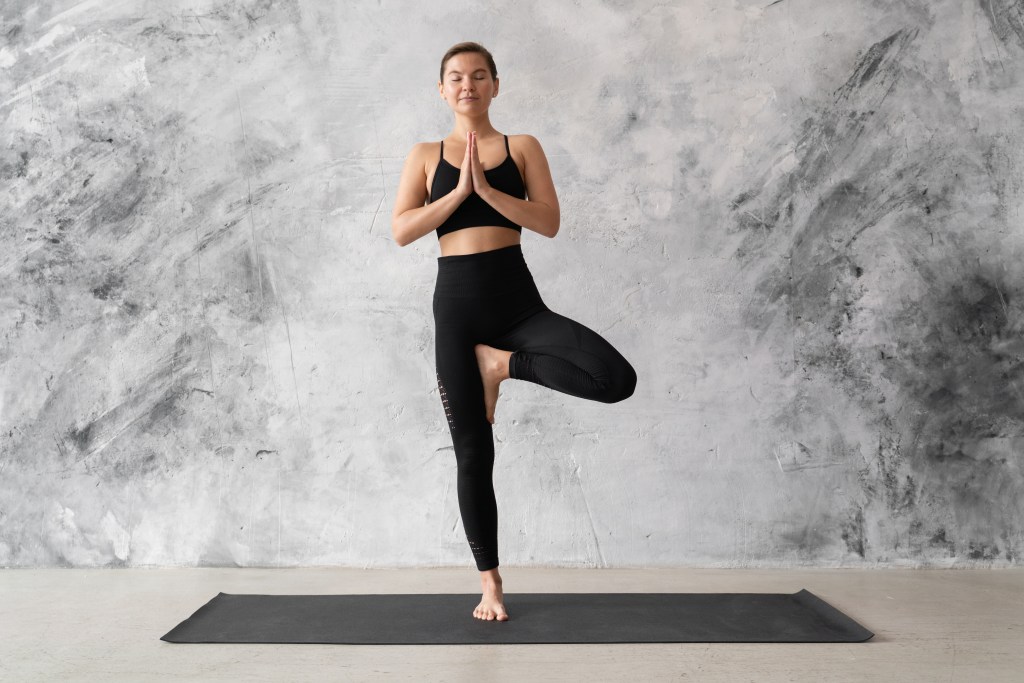
1. Tree Pose (Vrikshasana)

Okay, picture this: you’re standing on one leg, trying not to topple over while balancing your mental to-do list. Welcome to Tree Pose. This posture forces you to focus because if your mind wanders, you’ll end up wobbling like a palm tree in a storm. Balancing on one leg brings you right back into the present moment, dragging your mind out of its rabbit hole and into the now.

How to do it:

  • Stand tall with your feet together.
  • Shift your weight onto your right foot, lifting your left foot and placing it on your inner thigh (or calf if you’re feeling less adventurous—just avoid the knee).
  • Bring your hands together at your chest or raise them above your head like a tree’s branches.
  • Hold and breathe, focusing on a point in front of you to keep your balance.

Benefits for analytical thinkers: By sharpening concentration and pulling your attention into the present moment, Tree Pose helps you step out of the constant swirl of overthinking and regain clarity. It’s great for grounding yourself when your mind feels like it’s on a runaway train.

2. Eagle Pose (Garudasana)

Next up is Eagle Pose, which is like the “pretzel” of yoga. This one challenges you to wrap your limbs around each other and balance, which—spoiler alert—requires your brain to focus on something other than that random email from last week. The twisty nature of this pose helps you focus on alignment and breath, making it a great way to mentally declutter.

How to do it:

  • Stand tall and bend your knees slightly.
  • Lift your right leg and cross it over your left, wrapping your right foot around your left calf.
  • Cross your arms in front of you, with your right arm under your left, bringing your palms together (or back of hands if they don’t quite meet).
  • Hold and breathe, focusing on balance and breath.

Benefits for analytical thinkers: Eagle Pose works wonders for improving focus and mental clarity by forcing you to tune into your body. And if you’re mentally juggling a million things, this pose reminds you that sometimes it’s okay to untangle those thoughts, one twist at a time.

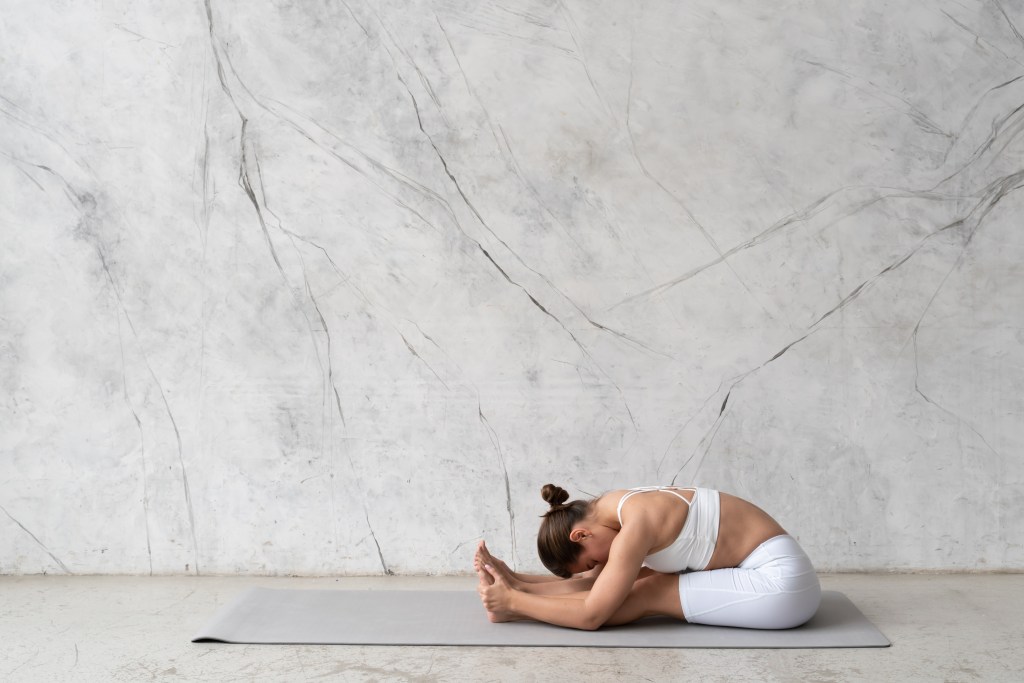
3. Seated Forward Fold (Paschimottanasana)

Now, let’s get a little introspective with Seated Forward Fold. This pose is like a warm hug for your brain. You fold forward, stretch out the body, and take a breather—perfect for those moments when your mind is doing Olympic-level overthinking. It’s a simple yet effective way to bring yourself back to center and slow down the mental hamster wheel.

How to do it:

  • Sit on the floor with your legs extended in front of you.
  • Inhale to lengthen your spine, and as you exhale, fold forward from your hips, reaching for your feet.
  • Let your head and neck relax, and breathe deeply.

Benefits for analytical thinkers: Seated Forward Fold calms the nervous system and encourages you to let go—both physically and mentally. It’s a great way to stretch out and reset when you’ve been in your head too long.

Breathing Techniques for Mental Clarity and Focus

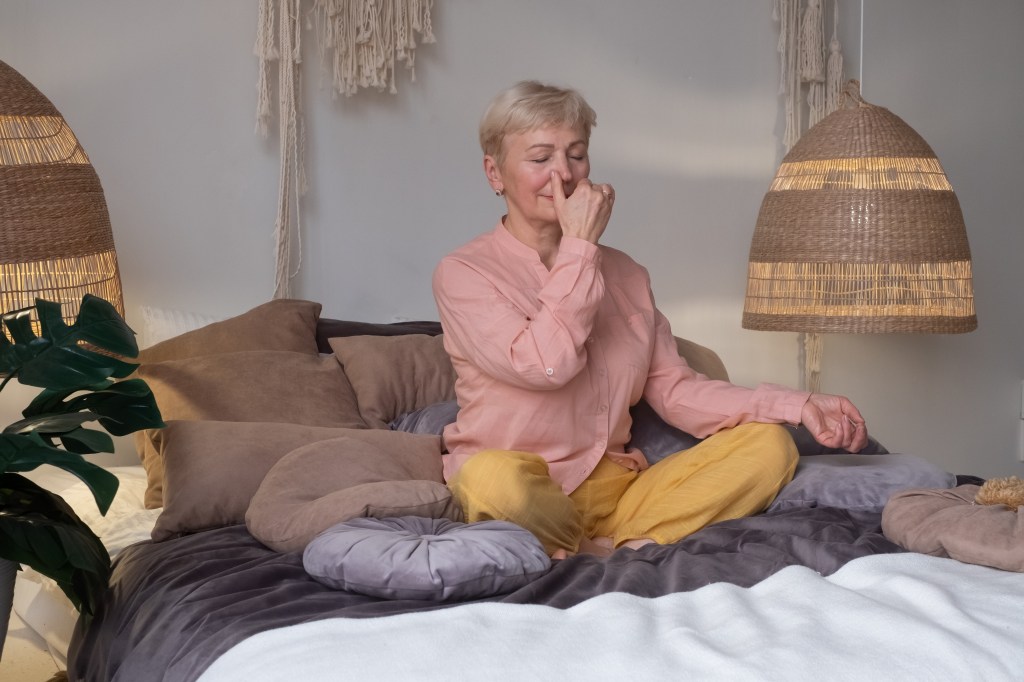
1. Nadi Shodhana (Alternate Nostril Breathing)

I know we’ve talked about Nadi Shodhana before, but it deserves a spot here because it’s a lifesaver for calming a busy mind. By balancing the breath between both nostrils, you also balance the brain’s hemispheres—meaning you’ll feel a little less “all over the place” and a little more in sync.

How to do it:

  • Sit comfortably with your spine straight.
  • Use your right thumb to close your right nostril.
  • Inhale through your left nostril.
  • Close your left nostril with your ring finger, release your right, and exhale through your right nostril.
  • Inhale through your right nostril, close it, and exhale through the left.
  • Repeat for 5-10 rounds.

Benefits for analytical thinkers: This breathing technique is like a mental reset button. It clears out the clutter and helps you find focus, clarity, and calm, making it perfect for overthinkers who need to hit “pause” on the endless mind chatter.

2. Bhramari (Bee Breath)

Let’s be real—sometimes your mind just won’t shut up, and that’s where Bhramari, or Bee Breath, comes in. It’s one of the quickest ways to quiet mental noise. The gentle humming sound you make during this practice soothes the nervous system and helps reduce anxiety.

How to do it:

  • Sit comfortably and close your eyes.
  • Place your thumbs over your ears and gently rest your fingers on your eyelids (optional).
  • Inhale deeply, and as you exhale, make a humming sound like a bee.
  • Focus on the vibration in your head and throat.
  • Repeat for 5-7 breaths.

Benefits for analytical thinkers: Bee Breath is like a gentle massage for your brain. It helps calm an overactive mind, reduces anxiety, and clears mental tension—perfect for those days when you can’t stop replaying that awkward conversation from three days ago.

Final Thoughts

If you’re an analytical thinker, yoga and pranayama (breathwork) can be your secret weapon for finding focus and reducing stress. Poses like Tree Pose and Eagle Pose challenge you to focus, while breathing techniques like Nadi Shodhana and Bee Breath clear mental clutter and bring clarity. Yoga offers more than just physical benefits—it’s a way to reset the mind and calm the constant overthinking.

So, the next time your mind won’t quiet down (whether due to a full moon or just the general chaos of life), give these poses and breathing techniques a try. And if all else fails, you can always blame it on the birds outside.

Tags: #YogaForFocus, #MindBodyConnection, #RationalSpirituality, #MentalHealth, #CalmMind, #ClarityThroughYoga, #StressRelief

Transform Anger into Love: A Simple Ritual

Don’t you just love those moments when you think you’ve got life figured out, and then—bam—the universe sends a gentle (or not-so-gentle) reminder that there’s always more work to do? Yesterday was one of those moments for me. After what felt like a very long week, I visited my beautiful teacher. I’d gotten caught up in my own thoughts and tasks, letting the noise of the week, work, and the infamous “cactus incident” dominate my focus. My teacher saw it immediately, calling me out on my lack of presence. She said she felt anger in me. I was resentful, but I hadn’t been aware of the proximity of my feelings of anger. Astounded, I knew she was right.

Walking afterward, I tried to understand why this anger had suddenly bubbled up. I reflected on why I was so frustrated and found myself feeling resentment toward people in my life who, for one reason or another, seemed unwilling to take charge of their own healing. But rather than let this anger control me, I decided to take a creative approach to transform it. The ritual I created made me feel so empowered that I wanted to share it with you, in case you’re also feeling the weight of emotions you’d rather not carry.

The Ritual: Pouring Out Anger, Pouring In Love

This ritual is a simple way to shift anger, fear, or frustration into love, hope, and gratitude. Simon Haas explains in The Book of Dharma that it’s essential to treat the here and now—the “field of now”—as a sacred place. When we take care of our inner world, we create the space to nurture our highest self.

The idea is to transform what feels negative into something nourishing, like turning air into water in a jug. Or, if you prefer, you can expel the air (negative emotions) by replacing it with water (love). Here’s how I did it:

  1. Set Up a Sacred Space
    Find a quiet place where you won’t be disturbed. Gather a jug (or any vessel that feels significant), a candle, and a glass of water. The jug represents your heart—where all emotions reside. Lighting the candle is important, spiritually fire often represents transformation, purification and rebirth.
  2. Pour Out the Anger
    As you hold the jug, take a deep breath and begin verbalizing everything you’re feeling. Let it all out, there’s no one to hear or judge—your frustrations, disappointments, fears, resentments. Let your words flow into the jug, as though you’re physically pouring the anger out of you. Imagine that every emotion, every word, is leaving you and settling into the jug.
  3. Pour In Love, Hope, and Gratitude
    Take your prepared water and begin to pour it into the jug slowly. As you do, focus on feelings of love, hope, and gratitude. Imagine each drop of water washing away the negative emotions, replacing them with compassion, peace, and joy. Just as a swan is said to be able to extract milk from water, we, too, can learn to separate the good from the unwanted. By pouring in these positive feelings, we’re consciously choosing to let go of anger and welcome in love instead.
  4. Reflect on Your Intention
    Once the jug is filled, take a moment to focus on the peacefulness you feel. Commit to nurturing your inner world with the same care and intention, understanding that what we choose to focus on will come to pass.

The Power of Transforming Your Inner World

In The Book of Dharma, Simon Haas explains that protecting our inner world requires us to recognise when disabling forces, like anger and fear, are present. He outlines three stages of conscious creation, each representing a different level of awareness and ability:

  1. Stage One: We recognise negative forces only after they’ve caused damage. In hindsight, we can see how fear or anger led to rash choices we later regretted. This stage teaches us to see the impact of negativity on our lives, even if only after the fact.
  2. Stage Two: We become aware of negativity as it enters, without letting it control us. At this level, we’re wise enough to pause and avoid decisions while we’re compromised by negative emotions. This is where we begin noticing our feelings as signals, guiding us to protect our inner world before harm is done.
  3. Stage Three: We recognise negative forces as they begin to form and are able to transform them into something positive. In this stage, we can replace anger and fear with love, hope, and gratitude. It’s here that conscious creation comes alive because we’re not just reacting—we’re actively cultivating the emotions we want to experience.

Just as filling a jug with water replaces the air within, filling our hearts with positive emotions like love, hope, and gratitude leaves no room for anger or fear.


My Journey of Transformation: From Anger to Peace

After leaving my teacher, I was surprised to find how deeply this anger ran. I’d spent so much time tending to my responsibilities and others’ needs that I’d let frustration fester. Walking later, I listened to The Book of Dharma, and it felt like Haas was speaking directly to me. I realized that I had failed to recognise the disabling force of anger creeping into my world. But thanks to my teacher’s insight, I could now see it clearly—and I was ready to transform it.

This ritual of pouring out the anger and filling the jug with gratitude, love, and hope felt like a powerful act of self-care. It reminded me that while I can’t control everything around me, I can choose how to respond. By shifting my focus to the good, I felt my perspective expand and my heart feel lighter.


Moving Forward With Love

This ritual is one I’ll turn to whenever I feel negative emotions trying to take over. The lesson here is that while we can’t always prevent anger, fear, or frustration from arising, we can choose how to respond. By treating our minds and hearts as sacred places, we allow love, hope, and gratitude to replace the things we don’t need to carry.

If you find yourself overwhelmed by emotions that feel too big to hold, try this ritual. Let it be a reminder that you have the power to create a peaceful inner world, one drop at a time. May we all keep finding ways to transform our lives, turning anger into love, fear into hope, and challenges into lessons.

The Four Dharma Principles for Peace and Clarity

In 2016, I found myself lying on my bathroom floor, utterly spent from yet another round of chemo. I was somewhere between exhaustion and sheer determination. I started listening to Yoga and the Dark Night of the Soul by Simon Haas on Audible. As I have already mentioned, I was searching for anxiety antidotes. That book opened the door to new possibilities. A new way of thinking and over time, a new way of being. Soon enough, I had The Book of Dharma lined up. It was set to be my next dose of inspiration.

As the YogiCFO, I aim to balance Dharma and Data. I thought now is a good time to introduce Dharma.

I was drawn to yoga when I heard it described as the “Science of the Mind.” This wasn’t about blind faith or dogma. It was about trying things out and seeing what worked. I kept only what resonated with me. That same spirit of experimentation drew me to dharma. In ancient Indian texts, dharma was the set of principles used to guide sovereigns in ruling wisely. And, after facing cancer, I came to realize I was my own “sovereign” in the truest sense. Cancer made one thing clear: every choice I made came with consequences, and only I could walk that journey. I wanted my decisions to be rooted in wisdom, not fear. I realised life was short, and prior to this, I was not really fulfilling my potential.

For me, dharma has been less of a rulebook and more of a compass, as Simon Haas describes it. It’s a way to navigate life with purpose by holding close four principles: Truth, Purity, Non-Violence, and Discipline. I’m not here to tell anyone else how to live. I can say that these principles have offered me a lifeline when I needed one. Through the storms of cancer treatment and chronic pain, facing the haunting fears of recurrence, and learning to find peace in solitude, dharma has been a gentle guide back to myself. Here’s how each principle has shown up for me.


Truth: The Art of Being Honest with Myself

Truth sounds straightforward, right? Just be honest. But after a cancer diagnosis, honesty takes on a new level. I convinced myself for a while that I was okay, that I was moving forward without fear. But if I was honest, I was living with a constant, nagging worry about recurrence. Truth, I learned, isn’t about pretending to be fearless or always having it together—it’s about admitting when I don’t.

These days, Truth means being real about my fears and not burying them under a mask of “I’m fine.” Sometimes, that’s admitting I’m scared or that I’m not okay. By acknowledging what’s really going on, I can acknowledge it, notice how it makes me feel and let it go. Truth, as it turns out, has been a source of freedom for me. It allows space for the parts of myself that need compassion. This is much better than denial.


Purity: Clearing Out the Clutter to Find Peace

Purity isn’t about some impossible level of perfection; it’s about clarity. For me, this principle became vital as I learned to manage chronic pain. Pain is exhausting—mentally, emotionally, physically. If I let my mind fill up with resentment, it only worsens the situation. Adding frustration is like fueling an already intense fire.

So, Purity for me is about letting go of that mental clutter and simplifying. I make time each day to clear my thoughts through meditation or writing. I let go of the “extras” that don’t serve me. Even physically, I’ve pared down my space to include only things that bring some peace or joy. Creating this clarity doesn’t make the pain go away. However, it allows me to be present with it. Instead of getting lost in the fog of frustration, I can face it directly. When I keep things clear, I feel a bit more in control. I feel this way even when the pain is out of my hands.


Non-Violence: Treating Myself with Kindness (and Forgiving the Not-So-Great Days)

Non-Violence, or Ahimsa, has been a real journey. It’s about compassion, both toward others and myself. This hasn’t come easily for me, especially when it comes to loneliness. Loneliness can make even the most grounded person feel off-kilter. But I’ve found that when I practice Non-Violence toward myself, I can transform loneliness into solitude. Solitude becomes a place where I can grow and find meaning instead of just feeling isolated.

Some days, that means I let myself rest rather than pushing through. Other days, it’s letting myself feel what I’m feeling without layering on guilt or criticism. And yes, some days it’s as simple as reaching out to a friend. I don’t have to sit with the feeling that I need to do it all alone. Non-Violence reminds me that I deserve kindness, even on the hardest days. This is one of the most powerful lessons I’ve found in dharma.


Discipline: Showing Up for Myself, No Matter What

Discipline used to feel rigid, all about self-control and willpower. But these days, discipline feels softer, like a commitment to myself. After cancer, I needed to rebuild my routines, to show up in ways that nurtured rather than depleted me. Discipline became my way of finding stability in the chaos.

Keeping a bedtime routine, doing my yoga, or sticking to my morning tea ritual are acts of discipline. They remind me I’m worth the effort. The small choices matter. Each one builds on the other. They create a foundation I can rely on even when life throws a curveball. Discipline isn’t about being harsh with myself. It’s about staying consistent with the things that help me feel grounded and whole. Over time, discipline enables freedom.


Living by Dharma as a Gentle Guide

As Haas explains, Dharma isn’t about rules. It’s more of a framework, a gentle guide that brings clarity and helps me focus on what really matters. I’m not here to preach. I won’t tell anyone else what to do. These four principles have offered me something I desperately needed: a way to live with intention. They help me stay present, choose peace over chaos, and show myself some compassion in the process.

The real beauty of dharma is that it doesn’t demand perfection. Some days I’ll nail it, and other days? Well, we all have those days. I realign with Truth, Purity, Non-Violence, and Discipline. Then I feel like I’m steering my life more purposefully. Life won’t ever be perfectly smooth. However, it feels a little lighter. It feels a little clearer. Life becomes much more manageable when I have these principles as my compass.


Finding Your Own Path

As Simon Haas explains, the power of dharma truly shines when all four principles—Truth, Purity, Non-Violence, and Discipline—work together, supporting each other to create a balanced and purposeful life. Each principle reinforces the others, guiding us to make choices with integrity, clarity, compassion, and commitment. If you’re curious about dharma, try engaging with each principle in small, manageable ways, observing how they resonate and complement each other in daily life. Or, you could read the book! The Book Of Dharma

You don’t need to dive in all at once; just allow these principles to be gentle reminders, guiding you towards choices that feel aligned. And if you feel like sharing, I’d love to hear how these ideas shape your journey. What practices or perspectives help you navigate your own path? Drop a comment below—I’d love to learn from your experiences, too. After all, we’re all finding our way, one choice at a time.


Finding Balance with Yoga: From Cacti to Clarity

Let me start by saying that this post was going to be a straightforward guide on using yoga to cultivate focus and clarity—until my garden decided to turn into an unexpected training ground for patience and resilience. So, let me share a little story with you, and I promise we’ll get to the yoga soon!

The Great Cactus Incident

This past Saturday, I was blissfully weeding my garden (which, by the way, was designed by my “earth angel” friend who has transformed my yard into a small paradise). I was decked out in protective gear: hat, sunglasses, gloves, boots—the full “don’t mess with me” garden look. Apparently however, one rogue cactus didn’t get the memo. I felt a sharp pain in my left knuckle, and sure enough, when I took off my glove, there was a tiny hair-like spike lodged in my skin. I shrugged it off, removed the spike, and went on with my day, feeling accomplished.

Fast forward to the afternoon, still in the garden, pulling weeds when I realized my hand refused to cooperate. It wouldn’t even close around the weeds. Instead, it opted for these spasms, making it feel like my hand had a mind of its own. Even then, I thought, Well, that’s odd, but carried on, totally missing the connection to my cactus encounter. That night, I had a strange dream where I was convinced I must have punched someone—my hand was throbbing, red, and swollen. I woke up in a haze, only to find that it wasn’t just a dream: my hand was doing its best impression of a balloon animal, complete with a lovely shade of red.

After six hours in the emergency department (an x-ray, ultrasound, tetanus shot, and a round of IV antibiotics later), it turns out that my cactus friend had managed to inject some kind of poison right into my tendon. I left the hospital with my hand wrapped in a compression bandage, feeling like I’d survived a battle. And, thanks to the antibiotics and lack of sleep, I now find myself trying to recover from the aftermath of a migraine and restore some balance.

So, this post is now dedicated to sharing exactly what I’m doing to get back to my center. If your mind or body is out of balance—whether from a cactus attack, a stressful week, or just life’s usual chaos—these yoga poses can be a gentle way to bring you back.


1. Tree Pose (Vrksasana): For When You Need to Feel Grounded

Let’s start with a pose that literally requires you to root yourself in one place—something I wish I’d done around that cactus. Tree Pose helps cultivate balance and focus by asking you to stand on one leg, which, if you’re like me, is sometimes easier said than done.

How to Practice Tree Pose:

  1. Stand with your feet hip-width apart.
  2. Shift your weight onto one leg, pressing that foot firmly into the ground (imagine you’re rooting down—pun intended).
  3. Lift the other foot and place it against your inner thigh or calf, whichever feels stable.
  4. Bring your hands to your heart, or raise them overhead like branches.
  5. Focus on a single point ahead of you to stay balanced and hold for 5-10 breaths. Then switch legs.

Why It Works:

Tree Pose helps focus and steady the mind. For those of us who live in our heads, grounding ourselves physically can calm mental chatter. Plus, it’s an ideal reminder that balance—both physically and mentally—is a work in progress.

When to Use It:

Whenever life has thrown you off balance, quite literally or figuratively, Tree Pose is a great way to find stability. I’d recommend starting your day with this pose, especially when you need to feel grounded.


2. Child’s Pose (Balasana): For Surrendering When Control is Out of Reach

Child’s Pose has saved me from myself on more than one occasion. It’s the ultimate “I surrender” pose, inviting you to let go and let your mind take a backseat. So when you’ve been spiked by a cactus, spent hours in emergency, or are simply feeling overwhelmed, Child’s Pose is the perfect reset button.

How to Practice Child’s Pose:

  1. Kneel on your mat with your big toes touching, knees together or apart (whatever feels better for you).
  2. Fold your torso forward, stretching your arms out in front of you or resting them by your sides.
  3. Rest your forehead on the mat, letting go of any tension in your neck.
  4. Take slow, deep breaths, and stay here for as long as you like.

Why It Works:

This pose calms both body and mind, making it easier to reconnect with yourself. In my case, it’s a way to release my “Why did I mess up?” thoughts and accept that sometimes things happen—spikes and all. Physically, it stretches the back and relieves tension, especially helpful after hours spent tensing up.

When to Use It:

Whenever you need a break from life, take a moment in Child’s Pose. Even just a few minutes can help you shift out of “fight or flight” mode and into a place of rest.


3. Legs Up the Wall (Viparita Karani): For Reversing the Day’s Chaos

Legs Up the Wall is one of those poses that’s almost too good to be true. It requires minimal effort but offers maximum relaxation. For me, it’s a lifesaver after days that make me feel like I’ve been turned upside down—perfect after an emergency room visit or a migraine-inducing experience.

How to Practice Legs Up the Wall:

  1. Sit sideways against a wall, then swing your legs up so they’re resting vertically along the wall.
  2. Lay back, with your arms relaxed by your sides or resting on your belly.
  3. Close your eyes and take slow breaths, letting gravity do the work.
  4. Stay here for 5-15 minutes, or as long as you need.

Why It Works:

By reversing blood flow, this pose helps reduce inflammation and calms the nervous system. It’s especially helpful after a high-stress day, as it gives the brain and body a chance to reset. For those of us who tend to get stuck in overdrive, Legs Up the Wall is like hitting “refresh.”

When to Use It:

Legs Up the Wall is perfect before bed or whenever you need a little mental detox. After my little cactus ordeal, it’s become part of my nightly routine. It helps me unwind and clear out the day’s tension.


Finding Clarity Through Yoga (and Life’s Unexpected Lessons)

Sometimes life throws you a cactus—and sometimes it’s literal. Practising yoga has helped me find clarity. It guides me even in the most chaotic of moments. Yoga reminds me to breathe, stay grounded, and surrender control when needed. These poses are gentle, accessible tools that can bring a little peace and balance to your day.

Ready to Give It a Try?

If you’re finding life a little overwhelming right now (hopefully without the cactus), try one of these poses. Start with Tree Pose in the morning, Child’s Pose when you need a break, and Legs Up the Wall to wind down in the evening. And please, learn from me: stay mindful of those hidden spikes in life’s garden!


Tags: #YogaForFocus #MindBodyBalance #ClarityThroughMovement #HolisticWellBeing