
Transform Anger into Love: A Simple Ritual

Don’t you just love those moments when you think you’ve got life figured out, and then—bam—the universe sends a gentle (or not-so-gentle) reminder that there’s always more work to do? Yesterday was one of those moments for me. After what felt like a very long week, I visited my beautiful teacher. I’d gotten caught up in my own thoughts and tasks, letting the noise of the week, work, and the infamous “cactus incident” dominate my focus. My teacher saw it immediately, calling me out on my lack of presence. She said she felt anger in me. I was resentful, but I hadn’t been aware of the proximity of my feelings of anger. Astounded, I knew she was right.

Walking afterward, I tried to understand why this anger had suddenly bubbled up. I reflected on why I was so frustrated and found myself feeling resentment toward people in my life who, for one reason or another, seemed unwilling to take charge of their own healing. But rather than let this anger control me, I decided to take a creative approach to transform it. The ritual I created made me feel so empowered that I wanted to share it with you, in case you’re also feeling the weight of emotions you’d rather not carry.

The Ritual: Pouring Out Anger, Pouring In Love

This ritual is a simple way to shift anger, fear, or frustration into love, hope, and gratitude. Simon Haas explains in The Book of Dharma that it’s essential to treat the here and now—the “field of now”—as a sacred place. When we take care of our inner world, we create the space to nurture our highest self.

The idea is to transform what feels negative into something nourishing, like turning air into water in a jug. Or, if you prefer, you can expel the air (negative emotions) by replacing it with water (love). Here’s how I did it:

  1. Set Up a Sacred Space
    Find a quiet place where you won’t be disturbed. Gather a jug (or any vessel that feels significant), a candle, and a glass of water. The jug represents your heart—where all emotions reside. Lighting the candle is important, spiritually fire often represents transformation, purification and rebirth.
  2. Pour Out the Anger
    As you hold the jug, take a deep breath and begin verbalizing everything you’re feeling. Let it all out, there’s no one to hear or judge—your frustrations, disappointments, fears, resentments. Let your words flow into the jug, as though you’re physically pouring the anger out of you. Imagine that every emotion, every word, is leaving you and settling into the jug.
  3. Pour In Love, Hope, and Gratitude
    Take your prepared water and begin to pour it into the jug slowly. As you do, focus on feelings of love, hope, and gratitude. Imagine each drop of water washing away the negative emotions, replacing them with compassion, peace, and joy. Just as a swan is said to be able to extract milk from water, we, too, can learn to separate the good from the unwanted. By pouring in these positive feelings, we’re consciously choosing to let go of anger and welcome in love instead.
  4. Reflect on Your Intention
    Once the jug is filled, take a moment to focus on the peacefulness you feel. Commit to nurturing your inner world with the same care and intention, understanding that what we choose to focus on will come to pass.

The Power of Transforming Your Inner World

In The Book of Dharma, Simon Haas explains that protecting our inner world requires us to recognise when disabling forces, like anger and fear, are present. He outlines three stages of conscious creation, each representing a different level of awareness and ability:

  1. Stage One: We recognise negative forces only after they’ve caused damage. In hindsight, we can see how fear or anger led to rash choices we later regretted. This stage teaches us to see the impact of negativity on our lives, even if only after the fact.
  2. Stage Two: We become aware of negativity as it enters, without letting it control us. At this level, we’re wise enough to pause and avoid decisions while we’re compromised by negative emotions. This is where we begin noticing our feelings as signals, guiding us to protect our inner world before harm is done.
  3. Stage Three: We recognise negative forces as they begin to form and are able to transform them into something positive. In this stage, we can replace anger and fear with love, hope, and gratitude. It’s here that conscious creation comes alive because we’re not just reacting—we’re actively cultivating the emotions we want to experience.

Just as filling a jug with water replaces the air within, filling our hearts with positive emotions like love, hope, and gratitude leaves no room for anger or fear.


My Journey of Transformation: From Anger to Peace

After leaving my teacher, I was surprised to find how deeply this anger ran. I’d spent so much time tending to my responsibilities and others’ needs that I’d let frustration fester. Walking later, I listened to The Book of Dharma, and it felt like Haas was speaking directly to me. I realized that I had failed to recognise the disabling force of anger creeping into my world. But thanks to my teacher’s insight, I could now see it clearly—and I was ready to transform it.

This ritual of pouring out the anger and filling the jug with gratitude, love, and hope felt like a powerful act of self-care. It reminded me that while I can’t control everything around me, I can choose how to respond. By shifting my focus to the good, I felt my perspective expand and my heart feel lighter.


Moving Forward With Love

This ritual is one I’ll turn to whenever I feel negative emotions trying to take over. The lesson here is that while we can’t always prevent anger, fear, or frustration from arising, we can choose how to respond. By treating our minds and hearts as sacred places, we allow love, hope, and gratitude to replace the things we don’t need to carry.

If you find yourself overwhelmed by emotions that feel too big to hold, try this ritual. Let it be a reminder that you have the power to create a peaceful inner world, one drop at a time. May we all keep finding ways to transform our lives, turning anger into love, fear into hope, and challenges into lessons.

Finding Balance with Yoga: From Cacti to Clarity

Let me start by saying that this post was going to be a straightforward guide on using yoga to cultivate focus and clarity—until my garden decided to turn into an unexpected training ground for patience and resilience. So, let me share a little story with you, and I promise we’ll get to the yoga soon!

The Great Cactus Incident

This past Saturday, I was blissfully weeding my garden (which, by the way, was designed by my “earth angel” friend who has transformed my yard into a small paradise). I was decked out in protective gear: hat, sunglasses, gloves, boots—the full “don’t mess with me” garden look. Apparently however, one rogue cactus didn’t get the memo. I felt a sharp pain in my left knuckle, and sure enough, when I took off my glove, there was a tiny hair-like spike lodged in my skin. I shrugged it off, removed the spike, and went on with my day, feeling accomplished.

Fast forward to the afternoon, still in the garden, pulling weeds when I realized my hand refused to cooperate. It wouldn’t even close around the weeds. Instead, it opted for these spasms, making it feel like my hand had a mind of its own. Even then, I thought, Well, that’s odd, but carried on, totally missing the connection to my cactus encounter. That night, I had a strange dream where I was convinced I must have punched someone—my hand was throbbing, red, and swollen. I woke up in a haze, only to find that it wasn’t just a dream: my hand was doing its best impression of a balloon animal, complete with a lovely shade of red.

After six hours in the emergency department (an x-ray, ultrasound, tetanus shot, and a round of IV antibiotics later), it turns out that my cactus friend had managed to inject some kind of poison right into my tendon. I left the hospital with my hand wrapped in a compression bandage, feeling like I’d survived a battle. And, thanks to the antibiotics and lack of sleep, I now find myself trying to recover from the aftermath of a migraine and restore some balance.

So, this post is now dedicated to sharing exactly what I’m doing to get back to my center. If your mind or body is out of balance—whether from a cactus attack, a stressful week, or just life’s usual chaos—these yoga poses can be a gentle way to bring you back.


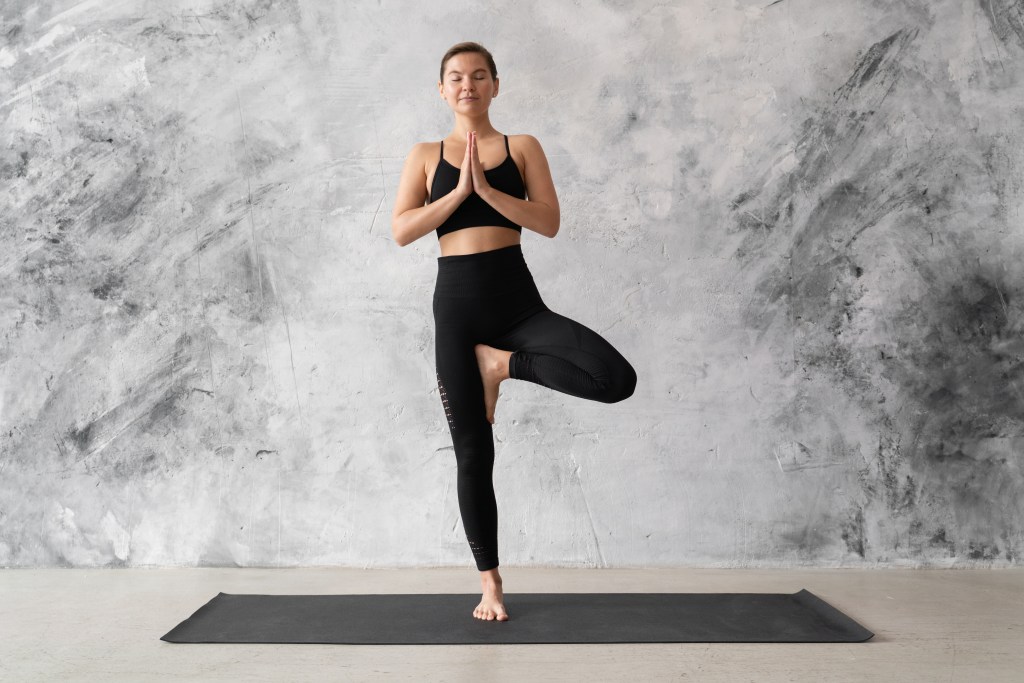
1. Tree Pose (Vrksasana): For When You Need to Feel Grounded

Let’s start with a pose that literally requires you to root yourself in one place—something I wish I’d done around that cactus. Tree Pose helps cultivate balance and focus by asking you to stand on one leg, which, if you’re like me, is sometimes easier said than done.

How to Practice Tree Pose:

  1. Stand with your feet hip-width apart.
  2. Shift your weight onto one leg, pressing that foot firmly into the ground (imagine you’re rooting down—pun intended).
  3. Lift the other foot and place it against your inner thigh or calf, whichever feels stable.
  4. Bring your hands to your heart, or raise them overhead like branches.
  5. Focus on a single point ahead of you to stay balanced and hold for 5-10 breaths. Then switch legs.

Why It Works:

Tree Pose helps focus and steady the mind. For those of us who live in our heads, grounding ourselves physically can calm mental chatter. Plus, it’s an ideal reminder that balance—both physically and mentally—is a work in progress.

When to Use It:

Whenever life has thrown you off balance, quite literally or figuratively, Tree Pose is a great way to find stability. I’d recommend starting your day with this pose, especially when you need to feel grounded.


2. Child’s Pose (Balasana): For Surrendering When Control is Out of Reach

Child’s Pose has saved me from myself on more than one occasion. It’s the ultimate “I surrender” pose, inviting you to let go and let your mind take a backseat. So when you’ve been spiked by a cactus, spent hours in emergency, or are simply feeling overwhelmed, Child’s Pose is the perfect reset button.

How to Practice Child’s Pose:

  1. Kneel on your mat with your big toes touching, knees together or apart (whatever feels better for you).
  2. Fold your torso forward, stretching your arms out in front of you or resting them by your sides.
  3. Rest your forehead on the mat, letting go of any tension in your neck.
  4. Take slow, deep breaths, and stay here for as long as you like.

Why It Works:

This pose calms both body and mind, making it easier to reconnect with yourself. In my case, it’s a way to release my “Why did I mess up?” thoughts and accept that sometimes things happen—spikes and all. Physically, it stretches the back and relieves tension, especially helpful after hours spent tensing up.

When to Use It:

Whenever you need a break from life, take a moment in Child’s Pose. Even just a few minutes can help you shift out of “fight or flight” mode and into a place of rest.


3. Legs Up the Wall (Viparita Karani): For Reversing the Day’s Chaos

Legs Up the Wall is one of those poses that’s almost too good to be true. It requires minimal effort but offers maximum relaxation. For me, it’s a lifesaver after days that make me feel like I’ve been turned upside down—perfect after an emergency room visit or a migraine-inducing experience.

How to Practice Legs Up the Wall:

  1. Sit sideways against a wall, then swing your legs up so they’re resting vertically along the wall.
  2. Lay back, with your arms relaxed by your sides or resting on your belly.
  3. Close your eyes and take slow breaths, letting gravity do the work.
  4. Stay here for 5-15 minutes, or as long as you need.

Why It Works:

By reversing blood flow, this pose helps reduce inflammation and calms the nervous system. It’s especially helpful after a high-stress day, as it gives the brain and body a chance to reset. For those of us who tend to get stuck in overdrive, Legs Up the Wall is like hitting “refresh.”

When to Use It:

Legs Up the Wall is perfect before bed or whenever you need a little mental detox. After my little cactus ordeal, it’s become part of my nightly routine. It helps me unwind and clear out the day’s tension.


Finding Clarity Through Yoga (and Life’s Unexpected Lessons)

Sometimes life throws you a cactus—and sometimes it’s literal. Practising yoga has helped me find clarity. It guides me even in the most chaotic of moments. Yoga reminds me to breathe, stay grounded, and surrender control when needed. These poses are gentle, accessible tools that can bring a little peace and balance to your day.

Ready to Give It a Try?

If you’re finding life a little overwhelming right now (hopefully without the cactus), try one of these poses. Start with Tree Pose in the morning, Child’s Pose when you need a break, and Legs Up the Wall to wind down in the evening. And please, learn from me: stay mindful of those hidden spikes in life’s garden!


Tags: #YogaForFocus #MindBodyBalance #ClarityThroughMovement #HolisticWellBeing


Breathwork Techniques for Stress Relief

The Power of Breathing: Finding Calm in Chaos

Ever have one of those days where you’re convinced the world is conspiring against you? I’ve had more than a few of those, especially during my cancer journey. From the endless appointments to the chaos of treatments, it was overwhelming. But in the midst of it all, I stumbled upon an unexpected lifeline: my breath.

Breathwork might sound too simple, but focusing on my breath kept me grounded during some of my darkest, most challenging moments. Let me take you back to a particularly surreal experience that tested my resolve—and how one breathing technique got me through it.

Where It All Began

Picture this: I’m lying on a gurney at a 45-degree angle, essentially “pouring” my breast into a mammogram machine while a surgeon attempts to insert clips into the tumour. I was tilted, compressed, and effectively trapped, with multiple people trying to place these markers. And to top it off, they missed. More than once.

It was a moment made for panic. I felt like I was upside down, trapped by this machine, with no way out. But at that moment, I remembered the one tool I had—something simple yet powerful: breathing. I began cycling through slow, deep breaths, focusing on each inhale and exhale, drawing my attention inward. The more I concentrated on my breath, the more I detached from the chaos around me.

I didn’t even realise the toll of the experience until a nurse came out to find me after the procedure. Her face was red, her eyes filled with tears, and she hugged me tightly without a word. Her tears were silent, but I felt the weight of the ordeal in her embrace. And in that moment, it was my turn to comfort her, saying, “It’s okay.”

The Turning Point: Discovering New Techniques

After that experience, it became clear that I needed more than one breathing technique in my toolkit. My counsellor pointed out that I might be suffering from anxiety. Gee, thanks for the insight. I decided it was time to go deeper. I began exploring various breathing practices. They help me manage the overwhelming emotions. Panic seemed to hover over my life like a dark cloud.

Over time, I found three techniques that became my mainstays. Each one has its own unique benefits and purpose, depending on what I need in the moment. Let me share them with you.

1. 4-7-8 Breath: Finding Calm in High-Stress Moments

The 4-7-8 breath was the first technique I learned after that clip-insertion ordeal. It’s my go-to when I feel like my anxiety is about to overtake me, providing instant calm and clarity.

How to Do It:

  • Inhale through your nose for a count of 4.
  • Hold your breath for 7 counts.
  • Exhale slowly through your mouth for 8 counts.

How It Helped Me:

During the following hospital visits, I used the 4-7-8 breath to steady myself. I used it, especially when I knew I’d be poked, prodded or placed inside imaging machinery (claustrophobic, anyone?). The elongated exhale calms the nervous system, returning the body to rest. It’s simple but incredibly effective. In hindsight, I am incredibly grateful for the opportunities that allowed me to practice in the real world. Sometimes, you need to be forced into these things. This is especially true if you believe (like I did) that you can plan out everything. My cancer diagnosis allowed me to recognise the reality that only your response is within your control. Everything else is entirely extraneous.

When to Practice:

This technique is perfect for high-stress situations or as a part of a nightly wind-down. Try starting with just 3-4 cycles, especially when feeling anxious or overwhelmed.

Pro Tip:

Make it part of your bedtime routine to help ease into a restful night. It’s a fantastic way to unwind after a challenging day.

2. Nadi Shodhana (Alternate Nostril Breathing): Creating Balance

This one felt slightly strange at first—blocking off one nostril, then the other—but the results were undeniable. Nadi Shodhana is about balancing the mind, which is perfect for those moments when I feel scattered or unable to focus.

How to Do It:

  • Close your right nostril with your thumb and inhale through your left.
  • Close your left nostril with your ring finger, and exhale through your right.
  • Inhale through the right, close it and exhale through the left.
  • Repeat this cycle for 5-10 rounds.

How It Helped Me:

I remember trying this one after a particularly intense counselling session. My mind was racing, full of emotions and worries. A few cycles of this technique helped me feel centred again, as if I could think clearly for the first time in hours.

When to Practice:

Nadi Shodhana is perfect when you need to refocus or feel off-balance. I often practice it in the morning to start the day on a balanced note or in the afternoon when I need a mental reset.

Pro Tip:

Try it first thing in the morning. Just five minutes can bring a surprising level of calm and focus to your day.

3. Bhramari (Bee Breath): Quieting the Mental Noise

Bhramari, or Bee Breath, was a bit odd for me initially. You hum like a bee on the exhale, creating a gentle vibration in your head. But let me tell you, this one is like a balm for an overactive mind.

How to Do It:

  • Sit comfortably, close your eyes, and take a deep breath in through your nose.
  • As you exhale, hum softly, creating a buzzing sound in your throat and head.
  • Repeat this 5-7 times.

How It Helped Me:

After a long, sleepless night when my mind just wouldn’t shut off, I tried Bee Breath out of pure desperation. The hum created a soothing vibration that helped quiet my thoughts and grounded me. It became my go-to for nights when I couldn’t get out of my head.

When to Practice:

Use this technique before bed or anytime your mind feels noisy. It’s excellent for relieving tension and calming the mind, especially if you’re prone to overthinking.

Pro Tip:

Find a quiet space where you won’t be interrupted, and focus on the vibrations. It’s incredibly calming and can help ease you into sleep.

How to Build Breathwork Into Your Daily Life

Starting with breathwork doesn’t mean overhauling your entire day. You don’t need to commit hours to these techniques—just a few minutes here and there. Here’s how to make breathwork a natural part of your life:

Set a Goal:

Begin with one technique for five minutes a day. Choose one that fits your current needs and practice it consistently. Once you’re comfortable, experiment with others based on your day’s demands.

What I’ve Learned This Month

After a month of focusing on breathwork, here’s what I’ve discovered:

  • Breathwork is grounding: It doesn’t change life’s challenges but gives you a stable foundation to handle them.
  • Consistency is key: Even small, daily practices add up over time.
  • It’s transformative: These techniques have shifted how I respond to stress, anxiety, and even those small daily annoyances.

Your Turn: Let’s Breathe Together

Have you tried breathwork before? Do you have a favourite technique, or are you just getting started? I’d love to hear your stories! Share your experiences in the comments below or tag me on social media if you’re trying out one of these techniques. Let’s breathe through the chaos together—one intentional inhale at a time.

Final Thought:

Breathwork isn’t just a tool; it’s a gentle reminder that even amid life’s toughest moments, you have the power to find calm within yourself. No matter what you’re going through, remember that your breath is always there to ground you. So, let’s make a pact to breathe more intentionally. Ready to join me?


Related Posts: