The Four Dharma Principles for Peace and Clarity

In 2016, I found myself lying on my bathroom floor, utterly spent from yet another round of chemo. I was somewhere between exhaustion and sheer determination. I started listening to Yoga and the Dark Night of the Soul by Simon Haas on Audible. As I have already mentioned, I was searching for anxiety antidotes. That book opened the door to new possibilities. A new way of thinking and over time, a new way of being. Soon enough, I had The Book of Dharma lined up. It was set to be my next dose of inspiration.

As the YogiCFO, I aim to balance Dharma and Data. I thought now is a good time to introduce Dharma.

I was drawn to yoga when I heard it described as the “Science of the Mind.” This wasn’t about blind faith or dogma. It was about trying things out and seeing what worked. I kept only what resonated with me. That same spirit of experimentation drew me to dharma. In ancient Indian texts, dharma was the set of principles used to guide sovereigns in ruling wisely. And, after facing cancer, I came to realize I was my own “sovereign” in the truest sense. Cancer made one thing clear: every choice I made came with consequences, and only I could walk that journey. I wanted my decisions to be rooted in wisdom, not fear. I realised life was short, and prior to this, I was not really fulfilling my potential.

For me, dharma has been less of a rulebook and more of a compass, as Simon Haas describes it. It’s a way to navigate life with purpose by holding close four principles: Truth, Purity, Non-Violence, and Discipline. I’m not here to tell anyone else how to live. I can say that these principles have offered me a lifeline when I needed one. Through the storms of cancer treatment and chronic pain, facing the haunting fears of recurrence, and learning to find peace in solitude, dharma has been a gentle guide back to myself. Here’s how each principle has shown up for me.


Truth: The Art of Being Honest with Myself

Truth sounds straightforward, right? Just be honest. But after a cancer diagnosis, honesty takes on a new level. I convinced myself for a while that I was okay, that I was moving forward without fear. But if I was honest, I was living with a constant, nagging worry about recurrence. Truth, I learned, isn’t about pretending to be fearless or always having it together—it’s about admitting when I don’t.

These days, Truth means being real about my fears and not burying them under a mask of “I’m fine.” Sometimes, that’s admitting I’m scared or that I’m not okay. By acknowledging what’s really going on, I can acknowledge it, notice how it makes me feel and let it go. Truth, as it turns out, has been a source of freedom for me. It allows space for the parts of myself that need compassion. This is much better than denial.


Purity: Clearing Out the Clutter to Find Peace

Purity isn’t about some impossible level of perfection; it’s about clarity. For me, this principle became vital as I learned to manage chronic pain. Pain is exhausting—mentally, emotionally, physically. If I let my mind fill up with resentment, it only worsens the situation. Adding frustration is like fueling an already intense fire.

So, Purity for me is about letting go of that mental clutter and simplifying. I make time each day to clear my thoughts through meditation or writing. I let go of the “extras” that don’t serve me. Even physically, I’ve pared down my space to include only things that bring some peace or joy. Creating this clarity doesn’t make the pain go away. However, it allows me to be present with it. Instead of getting lost in the fog of frustration, I can face it directly. When I keep things clear, I feel a bit more in control. I feel this way even when the pain is out of my hands.


Non-Violence: Treating Myself with Kindness (and Forgiving the Not-So-Great Days)

Non-Violence, or Ahimsa, has been a real journey. It’s about compassion, both toward others and myself. This hasn’t come easily for me, especially when it comes to loneliness. Loneliness can make even the most grounded person feel off-kilter. But I’ve found that when I practice Non-Violence toward myself, I can transform loneliness into solitude. Solitude becomes a place where I can grow and find meaning instead of just feeling isolated.

Some days, that means I let myself rest rather than pushing through. Other days, it’s letting myself feel what I’m feeling without layering on guilt or criticism. And yes, some days it’s as simple as reaching out to a friend. I don’t have to sit with the feeling that I need to do it all alone. Non-Violence reminds me that I deserve kindness, even on the hardest days. This is one of the most powerful lessons I’ve found in dharma.


Discipline: Showing Up for Myself, No Matter What

Discipline used to feel rigid, all about self-control and willpower. But these days, discipline feels softer, like a commitment to myself. After cancer, I needed to rebuild my routines, to show up in ways that nurtured rather than depleted me. Discipline became my way of finding stability in the chaos.

Keeping a bedtime routine, doing my yoga, or sticking to my morning tea ritual are acts of discipline. They remind me I’m worth the effort. The small choices matter. Each one builds on the other. They create a foundation I can rely on even when life throws a curveball. Discipline isn’t about being harsh with myself. It’s about staying consistent with the things that help me feel grounded and whole. Over time, discipline enables freedom.


Living by Dharma as a Gentle Guide

As Haas explains, Dharma isn’t about rules. It’s more of a framework, a gentle guide that brings clarity and helps me focus on what really matters. I’m not here to preach. I won’t tell anyone else what to do. These four principles have offered me something I desperately needed: a way to live with intention. They help me stay present, choose peace over chaos, and show myself some compassion in the process.

The real beauty of dharma is that it doesn’t demand perfection. Some days I’ll nail it, and other days? Well, we all have those days. I realign with Truth, Purity, Non-Violence, and Discipline. Then I feel like I’m steering my life more purposefully. Life won’t ever be perfectly smooth. However, it feels a little lighter. It feels a little clearer. Life becomes much more manageable when I have these principles as my compass.


Finding Your Own Path

As Simon Haas explains, the power of dharma truly shines when all four principles—Truth, Purity, Non-Violence, and Discipline—work together, supporting each other to create a balanced and purposeful life. Each principle reinforces the others, guiding us to make choices with integrity, clarity, compassion, and commitment. If you’re curious about dharma, try engaging with each principle in small, manageable ways, observing how they resonate and complement each other in daily life. Or, you could read the book! The Book Of Dharma

You don’t need to dive in all at once; just allow these principles to be gentle reminders, guiding you towards choices that feel aligned. And if you feel like sharing, I’d love to hear how these ideas shape your journey. What practices or perspectives help you navigate your own path? Drop a comment below—I’d love to learn from your experiences, too. After all, we’re all finding our way, one choice at a time.

Finding Balance with Yoga: From Cacti to Clarity

Let me start by saying that this post was going to be a straightforward guide on using yoga to cultivate focus and clarity—until my garden decided to turn into an unexpected training ground for patience and resilience. So, let me share a little story with you, and I promise we’ll get to the yoga soon!

The Great Cactus Incident

This past Saturday, I was blissfully weeding my garden (which, by the way, was designed by my “earth angel” friend who has transformed my yard into a small paradise). I was decked out in protective gear: hat, sunglasses, gloves, boots—the full “don’t mess with me” garden look. Apparently however, one rogue cactus didn’t get the memo. I felt a sharp pain in my left knuckle, and sure enough, when I took off my glove, there was a tiny hair-like spike lodged in my skin. I shrugged it off, removed the spike, and went on with my day, feeling accomplished.

Fast forward to the afternoon, still in the garden, pulling weeds when I realized my hand refused to cooperate. It wouldn’t even close around the weeds. Instead, it opted for these spasms, making it feel like my hand had a mind of its own. Even then, I thought, Well, that’s odd, but carried on, totally missing the connection to my cactus encounter. That night, I had a strange dream where I was convinced I must have punched someone—my hand was throbbing, red, and swollen. I woke up in a haze, only to find that it wasn’t just a dream: my hand was doing its best impression of a balloon animal, complete with a lovely shade of red.

After six hours in the emergency department (an x-ray, ultrasound, tetanus shot, and a round of IV antibiotics later), it turns out that my cactus friend had managed to inject some kind of poison right into my tendon. I left the hospital with my hand wrapped in a compression bandage, feeling like I’d survived a battle. And, thanks to the antibiotics and lack of sleep, I now find myself trying to recover from the aftermath of a migraine and restore some balance.

So, this post is now dedicated to sharing exactly what I’m doing to get back to my center. If your mind or body is out of balance—whether from a cactus attack, a stressful week, or just life’s usual chaos—these yoga poses can be a gentle way to bring you back.


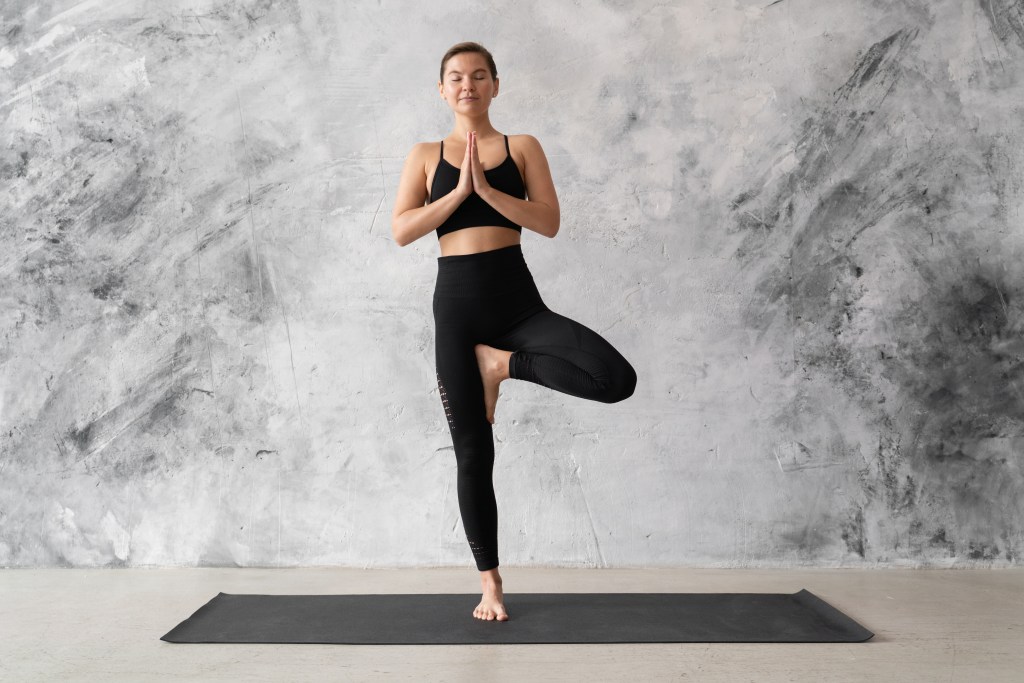
1. Tree Pose (Vrksasana): For When You Need to Feel Grounded

Let’s start with a pose that literally requires you to root yourself in one place—something I wish I’d done around that cactus. Tree Pose helps cultivate balance and focus by asking you to stand on one leg, which, if you’re like me, is sometimes easier said than done.

How to Practice Tree Pose:

  1. Stand with your feet hip-width apart.
  2. Shift your weight onto one leg, pressing that foot firmly into the ground (imagine you’re rooting down—pun intended).
  3. Lift the other foot and place it against your inner thigh or calf, whichever feels stable.
  4. Bring your hands to your heart, or raise them overhead like branches.
  5. Focus on a single point ahead of you to stay balanced and hold for 5-10 breaths. Then switch legs.

Why It Works:

Tree Pose helps focus and steady the mind. For those of us who live in our heads, grounding ourselves physically can calm mental chatter. Plus, it’s an ideal reminder that balance—both physically and mentally—is a work in progress.

When to Use It:

Whenever life has thrown you off balance, quite literally or figuratively, Tree Pose is a great way to find stability. I’d recommend starting your day with this pose, especially when you need to feel grounded.


2. Child’s Pose (Balasana): For Surrendering When Control is Out of Reach

Child’s Pose has saved me from myself on more than one occasion. It’s the ultimate “I surrender” pose, inviting you to let go and let your mind take a backseat. So when you’ve been spiked by a cactus, spent hours in emergency, or are simply feeling overwhelmed, Child’s Pose is the perfect reset button.

How to Practice Child’s Pose:

  1. Kneel on your mat with your big toes touching, knees together or apart (whatever feels better for you).
  2. Fold your torso forward, stretching your arms out in front of you or resting them by your sides.
  3. Rest your forehead on the mat, letting go of any tension in your neck.
  4. Take slow, deep breaths, and stay here for as long as you like.

Why It Works:

This pose calms both body and mind, making it easier to reconnect with yourself. In my case, it’s a way to release my “Why did I mess up?” thoughts and accept that sometimes things happen—spikes and all. Physically, it stretches the back and relieves tension, especially helpful after hours spent tensing up.

When to Use It:

Whenever you need a break from life, take a moment in Child’s Pose. Even just a few minutes can help you shift out of “fight or flight” mode and into a place of rest.


3. Legs Up the Wall (Viparita Karani): For Reversing the Day’s Chaos

Legs Up the Wall is one of those poses that’s almost too good to be true. It requires minimal effort but offers maximum relaxation. For me, it’s a lifesaver after days that make me feel like I’ve been turned upside down—perfect after an emergency room visit or a migraine-inducing experience.

How to Practice Legs Up the Wall:

  1. Sit sideways against a wall, then swing your legs up so they’re resting vertically along the wall.
  2. Lay back, with your arms relaxed by your sides or resting on your belly.
  3. Close your eyes and take slow breaths, letting gravity do the work.
  4. Stay here for 5-15 minutes, or as long as you need.

Why It Works:

By reversing blood flow, this pose helps reduce inflammation and calms the nervous system. It’s especially helpful after a high-stress day, as it gives the brain and body a chance to reset. For those of us who tend to get stuck in overdrive, Legs Up the Wall is like hitting “refresh.”

When to Use It:

Legs Up the Wall is perfect before bed or whenever you need a little mental detox. After my little cactus ordeal, it’s become part of my nightly routine. It helps me unwind and clear out the day’s tension.


Finding Clarity Through Yoga (and Life’s Unexpected Lessons)

Sometimes life throws you a cactus—and sometimes it’s literal. Practising yoga has helped me find clarity. It guides me even in the most chaotic of moments. Yoga reminds me to breathe, stay grounded, and surrender control when needed. These poses are gentle, accessible tools that can bring a little peace and balance to your day.

Ready to Give It a Try?

If you’re finding life a little overwhelming right now (hopefully without the cactus), try one of these poses. Start with Tree Pose in the morning, Child’s Pose when you need a break, and Legs Up the Wall to wind down in the evening. And please, learn from me: stay mindful of those hidden spikes in life’s garden!


Tags: #YogaForFocus #MindBodyBalance #ClarityThroughMovement #HolisticWellBeing


Breathwork Techniques for Stress Relief

The Power of Breathing: Finding Calm in Chaos

Ever have one of those days where you’re convinced the world is conspiring against you? I’ve had more than a few of those, especially during my cancer journey. From the endless appointments to the chaos of treatments, it was overwhelming. But in the midst of it all, I stumbled upon an unexpected lifeline: my breath.

Breathwork might sound too simple, but focusing on my breath kept me grounded during some of my darkest, most challenging moments. Let me take you back to a particularly surreal experience that tested my resolve—and how one breathing technique got me through it.

Where It All Began

Picture this: I’m lying on a gurney at a 45-degree angle, essentially “pouring” my breast into a mammogram machine while a surgeon attempts to insert clips into the tumour. I was tilted, compressed, and effectively trapped, with multiple people trying to place these markers. And to top it off, they missed. More than once.

It was a moment made for panic. I felt like I was upside down, trapped by this machine, with no way out. But at that moment, I remembered the one tool I had—something simple yet powerful: breathing. I began cycling through slow, deep breaths, focusing on each inhale and exhale, drawing my attention inward. The more I concentrated on my breath, the more I detached from the chaos around me.

I didn’t even realise the toll of the experience until a nurse came out to find me after the procedure. Her face was red, her eyes filled with tears, and she hugged me tightly without a word. Her tears were silent, but I felt the weight of the ordeal in her embrace. And in that moment, it was my turn to comfort her, saying, “It’s okay.”

The Turning Point: Discovering New Techniques

After that experience, it became clear that I needed more than one breathing technique in my toolkit. My counsellor pointed out that I might be suffering from anxiety. Gee, thanks for the insight. I decided it was time to go deeper. I began exploring various breathing practices. They help me manage the overwhelming emotions. Panic seemed to hover over my life like a dark cloud.

Over time, I found three techniques that became my mainstays. Each one has its own unique benefits and purpose, depending on what I need in the moment. Let me share them with you.

1. 4-7-8 Breath: Finding Calm in High-Stress Moments

The 4-7-8 breath was the first technique I learned after that clip-insertion ordeal. It’s my go-to when I feel like my anxiety is about to overtake me, providing instant calm and clarity.

How to Do It:

  • Inhale through your nose for a count of 4.
  • Hold your breath for 7 counts.
  • Exhale slowly through your mouth for 8 counts.

How It Helped Me:

During the following hospital visits, I used the 4-7-8 breath to steady myself. I used it, especially when I knew I’d be poked, prodded or placed inside imaging machinery (claustrophobic, anyone?). The elongated exhale calms the nervous system, returning the body to rest. It’s simple but incredibly effective. In hindsight, I am incredibly grateful for the opportunities that allowed me to practice in the real world. Sometimes, you need to be forced into these things. This is especially true if you believe (like I did) that you can plan out everything. My cancer diagnosis allowed me to recognise the reality that only your response is within your control. Everything else is entirely extraneous.

When to Practice:

This technique is perfect for high-stress situations or as a part of a nightly wind-down. Try starting with just 3-4 cycles, especially when feeling anxious or overwhelmed.

Pro Tip:

Make it part of your bedtime routine to help ease into a restful night. It’s a fantastic way to unwind after a challenging day.

2. Nadi Shodhana (Alternate Nostril Breathing): Creating Balance

This one felt slightly strange at first—blocking off one nostril, then the other—but the results were undeniable. Nadi Shodhana is about balancing the mind, which is perfect for those moments when I feel scattered or unable to focus.

How to Do It:

  • Close your right nostril with your thumb and inhale through your left.
  • Close your left nostril with your ring finger, and exhale through your right.
  • Inhale through the right, close it and exhale through the left.
  • Repeat this cycle for 5-10 rounds.

How It Helped Me:

I remember trying this one after a particularly intense counselling session. My mind was racing, full of emotions and worries. A few cycles of this technique helped me feel centred again, as if I could think clearly for the first time in hours.

When to Practice:

Nadi Shodhana is perfect when you need to refocus or feel off-balance. I often practice it in the morning to start the day on a balanced note or in the afternoon when I need a mental reset.

Pro Tip:

Try it first thing in the morning. Just five minutes can bring a surprising level of calm and focus to your day.

3. Bhramari (Bee Breath): Quieting the Mental Noise

Bhramari, or Bee Breath, was a bit odd for me initially. You hum like a bee on the exhale, creating a gentle vibration in your head. But let me tell you, this one is like a balm for an overactive mind.

How to Do It:

  • Sit comfortably, close your eyes, and take a deep breath in through your nose.
  • As you exhale, hum softly, creating a buzzing sound in your throat and head.
  • Repeat this 5-7 times.

How It Helped Me:

After a long, sleepless night when my mind just wouldn’t shut off, I tried Bee Breath out of pure desperation. The hum created a soothing vibration that helped quiet my thoughts and grounded me. It became my go-to for nights when I couldn’t get out of my head.

When to Practice:

Use this technique before bed or anytime your mind feels noisy. It’s excellent for relieving tension and calming the mind, especially if you’re prone to overthinking.

Pro Tip:

Find a quiet space where you won’t be interrupted, and focus on the vibrations. It’s incredibly calming and can help ease you into sleep.

How to Build Breathwork Into Your Daily Life

Starting with breathwork doesn’t mean overhauling your entire day. You don’t need to commit hours to these techniques—just a few minutes here and there. Here’s how to make breathwork a natural part of your life:

Set a Goal:

Begin with one technique for five minutes a day. Choose one that fits your current needs and practice it consistently. Once you’re comfortable, experiment with others based on your day’s demands.

What I’ve Learned This Month

After a month of focusing on breathwork, here’s what I’ve discovered:

  • Breathwork is grounding: It doesn’t change life’s challenges but gives you a stable foundation to handle them.
  • Consistency is key: Even small, daily practices add up over time.
  • It’s transformative: These techniques have shifted how I respond to stress, anxiety, and even those small daily annoyances.

Your Turn: Let’s Breathe Together

Have you tried breathwork before? Do you have a favourite technique, or are you just getting started? I’d love to hear your stories! Share your experiences in the comments below or tag me on social media if you’re trying out one of these techniques. Let’s breathe through the chaos together—one intentional inhale at a time.

Final Thought:

Breathwork isn’t just a tool; it’s a gentle reminder that even amid life’s toughest moments, you have the power to find calm within yourself. No matter what you’re going through, remember that your breath is always there to ground you. So, let’s make a pact to breathe more intentionally. Ready to join me?


Related Posts:

The Power of Rituals—Bringing Structure to Spirituality

Hello, dear readers! Today, we’re diving into a topic that has truly transformed my life: rituals. Now, I know what you might be thinking—rituals? Aren’t those reserved for ceremonies or something mystical? Well, yes and no. Rituals, in the way I practice them, are about creating small moments of intention in the day-to-day—a way to bring both structure and spirituality into this wonderfully chaotic journey we call life.

Why Rituals Matter

For most of my adult life, I ran on routines. Wake up, get the kids ready, work, cook dinner, sleep, rinse, repeat. The routines kept life organized and predictable, and, if I’m honest, I often felt like I was on autopilot. Looking back, it’s as if life happened, and I hardly even noticed because I was so busy with the day-to-day. But once the nest was empty, those routines became redundant and meaningless. I needed more than structure— connection, purpose, and calm. And that’s when I realized rituals could bring something new: balance between my rational mind and my spiritual heart.

Rituals are more than just habits—they are sacred moments woven into our daily lives, filled with purpose and intention. They invite us to slow down, to indeed be present, and to transform the ordinary into something beautiful. For someone like me, who often gets lost in the details and the constant hum of analysis, rituals have become a lifeline—offering stability amidst chaos while nurturing the deeper, more tender parts of myself. They remind me that life isn’t just about productivity; it’s about connection, purpose, and finding grace in even the most minor actions.

Morning Rituals: Setting the Tone for the Day

Something about the morning makes it the perfect time to bring a sense of intention into your day. I’ll admit, there was a time when my mornings consisted of hitting snooze three times before frantically scrambling to start the day. But now, I’ve transformed those early hours into a sacred time, and it’s made all the difference.

1. Morning Journaling
One of the most grounding rituals I’ve adopted is morning journaling. It doesn’t have to be anything profound—I simply sit down with a cup of tea (more on that later) and write whatever comes to mind. Some days, it’s a gratitude list. Other days, it’s a brain dump of all the worries and to-dos circling in my head. Occasionally, it’s just a description of the weather outside.

For my analytical side, journaling is a way to organize my thoughts, put those racing ideas on paper, and see them from a distance. For the spiritual side, it’s a way to connect with my inner self, to ask, “What do I need today?” and “How can I be kind to myself?” It’s a practice that brings me back to the present, where everything is a little more manageable.

2. Meditation and Breathwork
After journaling, I take a few minutes to meditate. I’m not talking about hours in the lotus position—just ten to twenty minutes of focused breathing or sitting quietly with my thoughts. Nadi Shodhana (alternate nostril breathing) is my go-to. It helps calm my mind, balancing my brain’s rational and creative sides and bringing a sense of equilibrium before the day’s demands begin.

Meditation allows me to feel the connection between my mind and body, creating a moment of stillness in what is often a whirlwind. For someone who leans into analytical thinking, it’s not about “finding zen”—it’s about creating mental space, giving my mind the rest it needs to tackle the day with clarity and focus.

3. Setting Intentions
Before officially starting the day, I take a moment to set an intention. It might be as simple as “I will be patient today” or “I will stay present.” Setting an intention makes me feel like I have some control over navigating the day, even if I can’t control what happens. For my rational side, it’s like programming a mantra that guides my actions. For the spiritual side, it’s a reminder that I get to choose how I show up, no matter what the world throws at me.

Evening Rituals: Closing the Day with Calm

Just as the morning sets the tone, the evening offers a time to reflect and release. I used to end my days exhausted, scrolling endlessly through my phone, hoping that would help me unwind. Spoiler alert: it didn’t. I was left overstimulated, with a racing mind that refused to let me sleep. That’s when I knew I needed to end the day differently—with rituals that would help me close the chapter with intention.

The Ultimate Wind-Down: Tea, Gratitude, and Unplugging

When it comes to protecting my sleep, I don’t mess around. Post-cancer, sleep became my top priority. After reading Matthew Walker’s “Why We Sleep,” I realized how crucial it is and permitted myself to treat sleep as a sacred gift. My go-to? Herbal leaf tea.

Step 1: Tea as the Ultimate Ritual

My sleep ritual begins with the kettle. Boiling water isn’t just part of the process anymore—it’s my signal to wrap up the day. I turn off the lights, light a candle, and let the quiet settle in. The soft hum of the kettle heating up is like a gentle reminder to unplug from the day’s chaos.

As the water boils, I mentally run through my gratitude list. No need for a journal—just a quiet reflection. I think about three things that went well. Some days, it’s big stuff like a supportive friend. On other days, I’m just grateful I didn’t spill the tea leaves all over the kitchen. It’s my time to appreciate that, even in the chaos, there’s always something to hold onto.

Selecting my tea feels almost ceremonial. I choose my herbal blend, like greeting an old friend—delicate, calming, exactly what I need. I watch the leaves fall softly into the pot, transforming the simple act of making tea into something meditative. When the 80-degree water (because, yes, we’re fancy now) pours over the leaves, I watch them swirl and release their calming aromas.

Step 2: Gratitude and Unplugging, Tea in Hand

As the tea steeps, I’ve already begun unplugging. No screens, no doomscrolling. This is my moment to disconnect. I might grab a book, sit by the window, or close my eyes and breathe. With its rising steam, the tea becomes the centrepiece of my unwinding ritual. It’s not about rushing—it’s about letting the tea do its thing while I take a moment to unwind.

By now, my gratitude list is fully formed. I’ve acknowledged the small wins of the day, like that perfect cup of coffee or the fleeting sunshine. It’s a simple reflection but enough to shift my mood from stressed to serene.

Step 3: Sipping into Serenity

When the tea is ready, that first sip is like a reward for making it through the day. The warmth in my hands and the soothing flavours tell my body, “You’ve done enough.” The steam is like a soft hug, signalling to my brain that the work is over and it’s time to rest.

This ritual—tea, gratitude, and unplugging—has become my nightly grounding practice. By the time I finish my cup, I’m already halfway asleep. It’s not just about the tea; it’s about carving out space for myself, acknowledging the good, and transitioning into rest mode.

Rituals as Bridges Between Rationality and Spirituality

Rituals bridge the gap between our need for structure and our desire for connection. They bring predictability to the day, which soothes the rational mind. They also invite mindfulness and reflection, nurturing the spiritual side. Rituals remind us that we’re more than just “doers”—we are beings capable of deep connection with ourselves and the world around us.

For analytical thinkers, rituals provide a sense of control—structuring the day to reduce stress and bring clarity. But they also invite surrender, presence, and a moment to simply be. This balance is why rituals are essential to my life and why I encourage you to try them.

Create Your Own Rituals

Here are a few simple ideas to help you create rituals that bring structure and spirituality into your day:

  • Morning Gratitude: Before getting out of bed, think of one thing you’re grateful for. Start the day on a positive note and notice the shift in perspective.
  • Mindful Breaks: Set a timer during the day to take a breath, stretch, or check in with yourself. A simple way to bring mindfulness into a busy schedule.
  • Evening Reflection: Before bed, reflect on the best part of your day. Let it be the last thought before sleep, fulfilling the day.

Moon Cycles: Create rituals that align with the moon’s phases. For the new moon, set fresh intentions and be grateful for the lessons coming for your highest self. During the full moon, practice reflection and prepare to release anything that no longer serves you as the moon is emptying.

Seasonal Shifts: Welcome each new season with a ritual. For example, in the winter, light candles, journal what you wish to nurture within yourself and begin a new creative course online or locally. In the spring, plant something, be it seeds or intentions, and watch them grow.

Birthday Rituals: Your birthday is the perfect time for a yearly ritual. Set
intentions for the coming year, reflect on the past year’s lessons, and perhaps even create a self-care ritual to celebrate yourself.

Rituals don’t have to be complicated or time-consuming. They just have to be intentional. In that intention, they create balance—a way to connect the rational with the spiritual, the structure with the flow, and the mind with the heart.

Here’s to making space for rituals that calm the mind, nurture the soul, and bring a little sacredness to our daily routines.