When Life Sends You Sideways

It’s been a long time between posts.

And not the kind of “life got busy” pause — but the kind of full-body halt that comes when life flips your world upside down and knocks the breath clean out of you.

A Dream Realised… Briefly

At the start of 2025, I finally did it — I boarded a flight to India for a long-awaited adventure with Camel Treks Australia. It had been years in the making. I was craving wide skies, desert stillness, shared stories, and soul-deep restoration.

For a while, it was all that and more.

But life doesn’t always follow the plan.

A Message at 4am

I had barely touched back down on Australian soil when everything changed.

Jet-lagged, disoriented, and still holding the scent of incense and dust, I checked my phone at 4am. A message was waiting from my partner of 2.5 years — a man I love deeply, who knows me in both stillness and storm. The message simply read:

“Are you awake?”

Something in me braced. My reply was quick.

His answer came faster — and chilled me to my core:

“I’ll be with you whatever happens. But there’s been an accident. I’ve heard something’s happened — you need to call the police and find out what hospital they’ve been taken to.”

My heart dropped.

The Unfolding

My son and my ex-husband — my life partner for 30 years and the father of my children — had been in a horrific car accident. Both were critically injured. Both were fighting for their lives.

What followed was a surreal blur: hospitals, emergency teams, burns units, and the heavy silence that fills the space between questions no one can answer.

Within a fortnight, my ex-husband succumbed to his injuries and passed away on my 55th birthday.

The complexity of that grief is hard to name. This was someone I once loved, built a life with, raised children with. Our paths had long diverged, but the roots ran deep. His death marked the end of an era I hadn’t realised was still quietly shaping me.

Holding Death in Both Hands

I’ve been here before — near death’s edge. I’ve walked alongside it during illness, felt its breath on my neck through my own near-death experiences, and sat vigil with loved ones as they crossed over.

Death, to me, has never been a stranger. It is a powerful, mysterious teacher — one that strips away the unnecessary and leaves only what matters.

But this time… it asked more of me. It pulled at my roles as mother, as former wife, as woman, as witness — and forced me to sit with all the tangled pieces.

The In-Between

In the weeks and months that followed, I stepped back. From the blog. From work. From almost everything.

I poured my energy into being there for my son, into finding a path forward, into grieving with honesty and gentleness. I went quiet — not because I had nothing to say, but because there were no words wide enough to hold it all.

And Now

I’m not who I was at the beginning of this year.

Something in me has softened. Other parts have sharpened. I feel more grounded, more awake, more certain of what really matters.

This isn’t a return to blogging as usual. It’s a continuation — from where I now stand, in the middle of the mess and the meaning, still choosing to tell the truth, still choosing to grow.

Thank you for your patience, your presence, and for being part of this space — one that holds not just the light, but also the shadow, the mystery, and the unexpected turns that come with living a fully human life.

More soon — from the heart.

From Delhi to Agra: Elephants, Love Stories, and Two Highway Pit Stops

The Yamuna Expressway is less a highway and more an unscripted Bollywood drama—tractors, cows, and helmet-free bikers vying for space while sacred cows judge the chaos from the sidelines. Our journey to Agra included not one, but two memorable pit stops: a pricey latte at Highway Masala (worth it for the clean restroom alone) and a Butter Paneer Burger at McDonald’s that redefined fast food. But the real highlight was the Elephant Conservation and Care Centre, where majestic giants, once abused, now thrive in peace. Add a glittering Taj Mahal love story performance to the mix, and you’ve got a day as unforgettable as it was chaotic.

Our day began in Delhi with a warm and hearty breakfast at Prakash Kutir, where Ajay and Savita’s hospitality could convince anyone to stay forever. But the road to Agra beckoned, promising elephants, a taste of history, and adventures along the way.

The Yamuna Expressway: A Highway of Contrasts

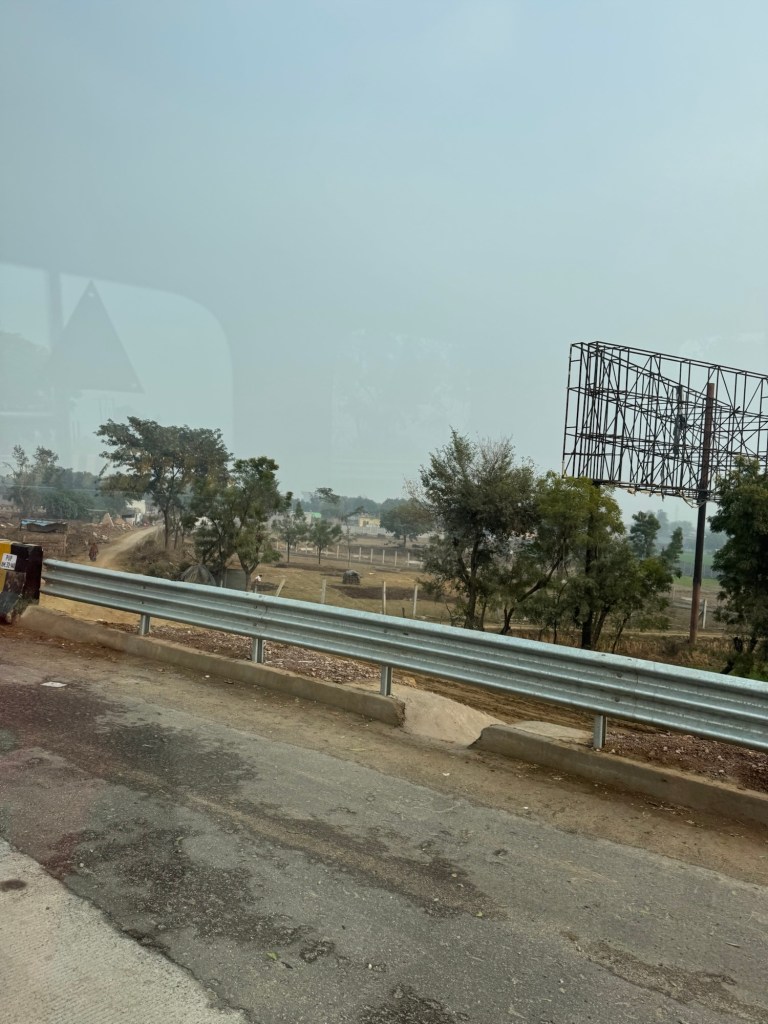
Part of the Yamuna Expressway

The Yamuna Expressway is less a highway and more an unscripted drama. Tractors share lanes with speeding cars, helmets and seatbelts are treated as optional, and sacred cows amble about as if they own the place (they probably do). The roadside scenery is an ever-changing slideshow of paddock cricket matches, brick kilns, and rubbish that stretches endlessly. There was even a dead dog and more than one abandoned bicycle—because why not add a little mystery to the mix?How did that dog die? I find myself wondering. It did not look like he’d been run over, possibly malnourishment or exhaustion I suspect.

Our first stop was Highway Masala, a roadside haven where I indulged in a latte that cost 335 rupees ($6.33 after tax and tip). Pricey, yes, but after a morning of visual chaos, it was worth every penny. Karen, our ever-resourceful guide, tipped the restroom attendant generously, ensuring we all got to freshen up in clean, civilized conditions—a rare and much-appreciated treat on this journey.

Back on the road, the conversations in the bus merged into a pleasant hum as we passed Mathura’s signature brick-making kilns and teenagers playing cricket on any patch of dirt they could find. My travel thoughts turned contemplative, but hunger soon pulled me back into the moment.

Lunch at McDonald’s: A Quick Bite Before the Elephants

With the Elephant Conservation and Care Centre (ECCC) as the day’s highlight, Karen, ever mindful of the clock, opted for a no-nonsense lunch at McDonald’s. This was not McDonalds as we knew it in Australia; this was India, and I embraced it wholeheartedly by ordering a Butter Paneer Burger (despite the fact I avoid McDonald’s and any fast food ordinarily). Equal parts spicy, buttery, and satisfying, it felt like a tiny triumph of Indian flavor over fast food uniformity.

The quick meal allowed us to stay on schedule while fueling up for what we all knew would be the most impactful part of the day—the visit to the elephants.

Elephant Conservation and Care Centre (ECCC): A Sanctuary of Second Chances

An impactful presentation…why this work is so important.

Mathura brought us to the ECCC, a sanctuary dedicated to rescuing and rehabilitating abused and exploited elephants. Here, these majestic animals are given a second chance at life, free from the chains—both literal and figurative—that once bound them. Each elephant has a story, and hearing them is equal parts heartbreaking and hopeful. The presenter was exceptional. What is most impressive is the centre’s focus on rehabilitating the elephants owners and family as well in order to break the cycle altogether.

The chains that once bound…

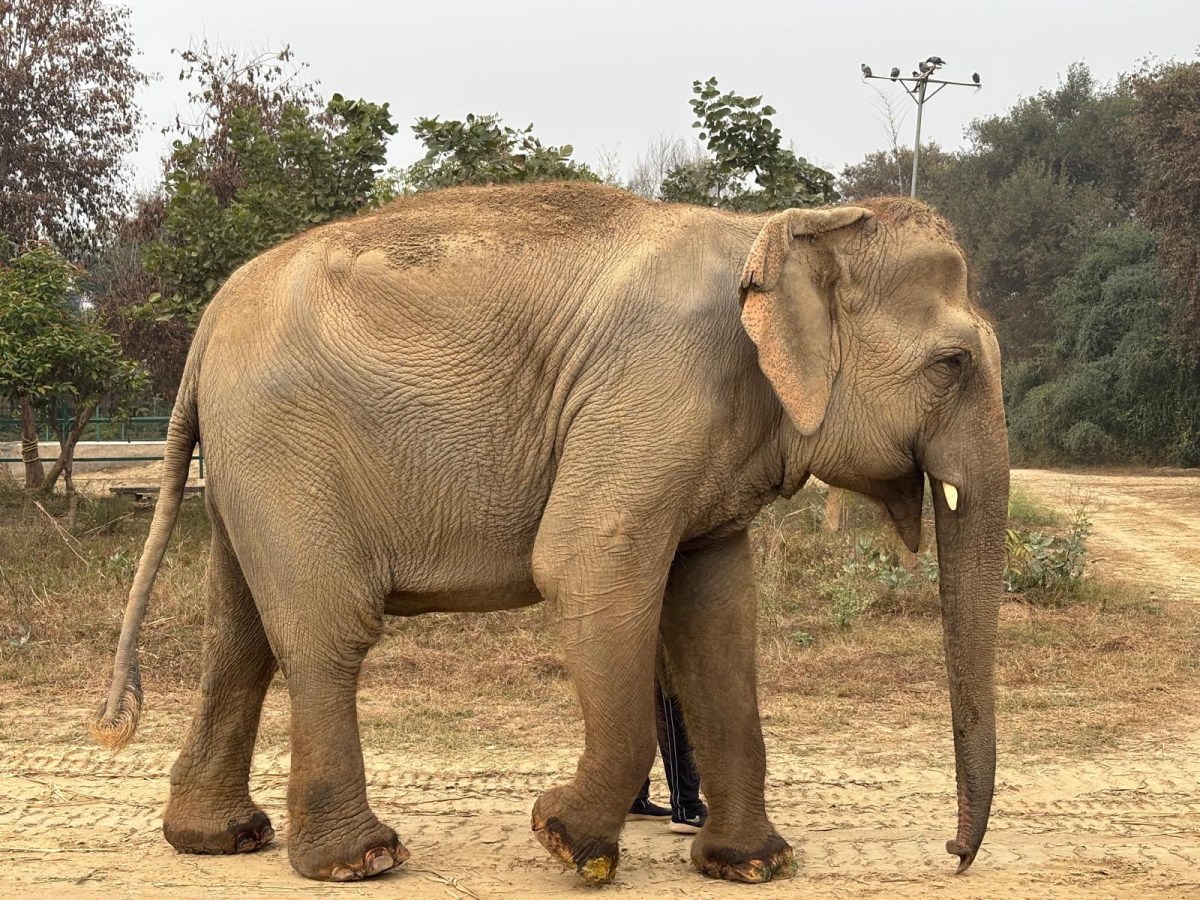
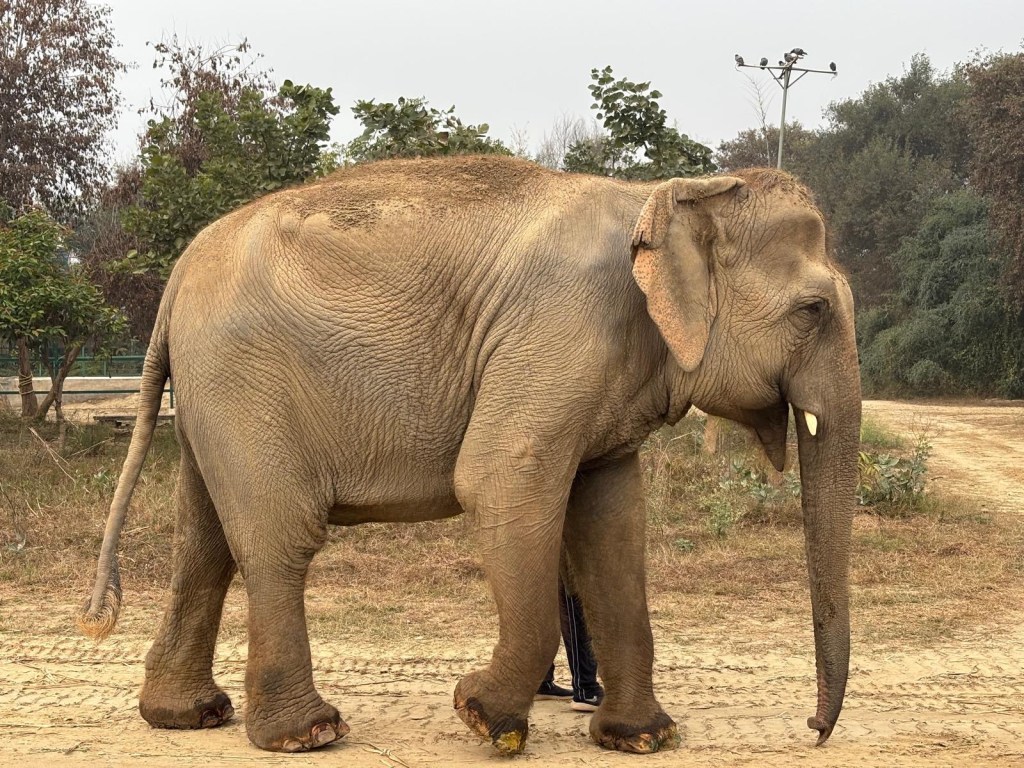
Mia, who spent decades performing in circuses and was often starved and beaten had arrived at the centre in a state of abject physical and mental distress. Now she spends her days basking in the sun, playing in the mud, and eating nourishing food alongside her BFF Rhea. Learning about the abuse these elephants endured and seeing their transformation into happier, healthier creatures was a humbling experience that left us all a little more compassionate—and a lot more aware.

https://wildlifesos.org/

Mia aged 52 – note her poor feet needing continued treatment as a result of abuse suffered before being rescued.

Agra: Love, Lights, and a Bit of Contemplation

As we arrived in Agra, the chaotic energy of the day gave way to the serene charm of Da Bungalow, a retreat that combines modern comfort with traditional Indian aesthetics.

The evening took us to the Agra Mohabbat The Taj Show, a glittering spectacle that brought the love story of Emperor Shah Jahan and Mumtaz Mahal to life. With its vibrant costumes, entrancing music, and heartfelt performances, it was the perfect way to end a day that had already felt larger than life.

Reflections on the Journey

As we made our way back to Da Bungalow, the chatter of the group softened, and my thoughts drifted to the changes awaiting me back home. My house is on the market, with a buyer viewing it tomorrow morning. Will my next chapter take me to another town? Or, will I stay in the town I’ve come to love. These questions hung in the air, unanswered but oddly comforting in their ambiguity.

For now, I am content to let the answers come in their own time. Tomorrow, the Taj Mahal awaits. If it’s even half as spectacular as the Butter Paneer Burger, I’ll call it a win. For today, I’m just grateful for elephants, clean restrooms, and the magic of being present on this wild, wonderful journey.

Finding Peace This Christmas: A Journey of Growth

Christmas Eve Morning: A Sacred Stillness

It’s Christmas Eve morning. Like most mornings, I wake to the soft dawn light. It streams through the open shutters of my bedroom overlooking the Blue Mountains. Today’s light feels particularly radiant, bathing the room in a golden glow and promising the start of a beautiful day. The sun rises with its unhurried elegance, and I find myself drawn to my yoga mat, grounding myself in meditation. I savor the stillness of this sacred moment, letting the peace wash over me.

Unusually, my peace is interrupted by a phone call. It’s my partner, 60 kilometers away, gently reminding me that he’s patiently waiting for my arrival later today. Christmas treats are packed, and together we’ll prepare our lunch for tomorrow. His kind voice carries a reassurance that surprises me. I feel truly at peace. This happens even in this quieter, more solitary lead-up to Christmas.

Christmas has always been a complex time since my divorce. With my boys no longer at home, it has often felt tinged with loneliness. In past years, I buried those feelings in busyness. I cooked meals for my parents and took them to their home. I visited my sister, brother, and aunt, all in separate places. The constant flurry of activity left little time to sit with my emotions.

This year has been different. I’ve intentionally allowed myself to feel the emotions for the first time. I’ve processed the emotions that surfaced in the weeks leading up to today. Instead of pushing them aside, I’ve worked through them, piece by piece. And now, as Christmas approaches, I’ve reached a quiet acceptance: everything is exactly as it is meant to be. There’s peace in letting go of the past and embracing the moment, just as it is.


2024: A Year of Challenge and Growth

2024 was a challenging year—there’s no doubt about that. But as the months rolled on, I discovered something remarkable: I’ve gotten better at navigating life’s inevitable ups and downs. Yes, some moments tested me. There were tears, big emotions, and times when life threw its curveballs. But I’ve learned not to let those moments keep me down for long.

I’ve started embracing emotion for what it truly is—e(motion)—energy in motion. It’s meant to move through us, not get stuck. Brene Brown’s analogy that emotions are like trains traveling through a tunnel resonates deeply with me. Solitude is the gift that lets me sit with my emotions. I can feel them fully. Then, I let them pass through that tunnel. And here’s the beautiful part: as I practice this, I notice the process gets quicker. How powerful is that? I realise I can shift my emotional state. I do this not by suppressing it but by feeling it. I release it and embrace the growth it brings. Honestly, it feels like I’m developing a superpower.

So, what’s changed? A big part is the sacred, joyful collection of rituals and practices I’ve created for myself. They’re small things—simple and ordinary—but they bring me immense joy. It is a morning meditation. It’s a walk in the mountains. It is lighting a candle at the end of the day, or at the beginning of a yoga practice. These practices honour my own needs. They keep me grounded. They’re the foundation. They allow me to show up for others in a true way. I do this without losing myself in the process. Most of the time, anyway. Let’s call it progress, not perfection. 😉


Closing One Chapter to Open Another

Five years after my divorce, I finally feel ready to let go of something I’ve held onto tightly: my home. Yesterday, I signed the contract with the agent. I spent so much time toying with the idea of selling. I often wondered what life might look like beyond these walls. Suddenly, it felt right. The decision didn’t come overnight—it’s been a slow, deliberate process. I’ve entertained the idea. I have contemplated it in my mind and heart. I tried it on for size in countless ways. But now, I feel ready to close this chapter and start anew.

As Rumi so beautifully says:

“This is love: to fly toward a secret sky, to cause a hundred veils to fall each moment. First to let go of life. Finally, to take a step without feet.”

That’s exactly where I find myself. I have no clear picture of what 2025 will bring. I know that I’ll no longer be tied to the identity this home has attached to me. It defined me as mother, wife, suburbanite, and host. It’s time to redefine myself without the labels this space has so lovingly carried for me. It’s a leap into the unknown, but for the first time, it feels exhilarating rather than daunting.


Looking Ahead to 2025

Anticipation and Gratitude: Embracing What’s Next

I am flying to India in January, and with each passing day, the anticipation builds. People tell me such a journey can be life-changing. But here’s the thing: when you live fully in the moment, every moment is life-changing. There are no expectations, no regrets—just the now. How freeing is that?

Perhaps when I return, a new home will have found its way to me. Perhaps it will take longer. Who knows? All I know is this: I’m embracing the unknown for what feels like the first time in my 55 years. As I write this, if I’m honest, I remember this feeling from childhood. I’m embracing it with a sense of wonder. It’s that same exhilaration I felt as a little girl when I discovered the tree outside my bedroom window and begged my mum for a spoonful of Vegemite to fuel my climb. That pure, unfiltered anticipation is what I’m feeling now as I look ahead to 2025.

The thought excites me. It’s a blank canvas. It’s an opportunity to create a space that reflects who I am now. It does not reflect who I’ve been. The Blue Mountains will stay my sanctuary. My future identity will be lighter and freer. It will be untethered from the stories of the past.


Gratitude for the Chapter That’s Closing

This Christmas, I am preparing to leave the home that has held so much of my story. I’m overwhelmed with gratitude. I’m grateful for the years I’ve spent here. I appreciate the growth it has nurtured. I admire, in myself, the courage it has taken to finally step into what’s next. This home has been a place of love, resilience, and transformation, and now it’s time to carry those lessons forward.

If there’s one thing I’ve learned, it’s this: the joy we cultivate within ourselves radiates outward. It helps us show up, serve, and live fully—without losing sight of who we truly are. That joy is my anchor as I move into this next chapter.


Carrying Peace Into the Holidays

As the day unfolds, I’ll pack up the Christmas goodies and head to my partner’s place. But I won’t just be carrying treats—I’ll be bringing the joy and peace that have taken root in my heart. This Christmas feels different, lighter. It’s a season of transition, a celebration of what’s been and what’s to come. Wherever this journey takes me, I’m ready to greet it with open arms and a heart full of gratitude. Wherever you are today, I hope you’re finding your own moments of stillness. I wish that you experience joy and maybe even a little courage to take a step without feet. Wishing you a Christmas filled with light and love. 🎄✨

The Four Dharma Principles for Peace and Clarity

In 2016, I found myself lying on my bathroom floor, utterly spent from yet another round of chemo. I was somewhere between exhaustion and sheer determination. I started listening to Yoga and the Dark Night of the Soul by Simon Haas on Audible. As I have already mentioned, I was searching for anxiety antidotes. That book opened the door to new possibilities. A new way of thinking and over time, a new way of being. Soon enough, I had The Book of Dharma lined up. It was set to be my next dose of inspiration.

As the YogiCFO, I aim to balance Dharma and Data. I thought now is a good time to introduce Dharma.

I was drawn to yoga when I heard it described as the “Science of the Mind.” This wasn’t about blind faith or dogma. It was about trying things out and seeing what worked. I kept only what resonated with me. That same spirit of experimentation drew me to dharma. In ancient Indian texts, dharma was the set of principles used to guide sovereigns in ruling wisely. And, after facing cancer, I came to realize I was my own “sovereign” in the truest sense. Cancer made one thing clear: every choice I made came with consequences, and only I could walk that journey. I wanted my decisions to be rooted in wisdom, not fear. I realised life was short, and prior to this, I was not really fulfilling my potential.

For me, dharma has been less of a rulebook and more of a compass, as Simon Haas describes it. It’s a way to navigate life with purpose by holding close four principles: Truth, Purity, Non-Violence, and Discipline. I’m not here to tell anyone else how to live. I can say that these principles have offered me a lifeline when I needed one. Through the storms of cancer treatment and chronic pain, facing the haunting fears of recurrence, and learning to find peace in solitude, dharma has been a gentle guide back to myself. Here’s how each principle has shown up for me.


Truth: The Art of Being Honest with Myself

Truth sounds straightforward, right? Just be honest. But after a cancer diagnosis, honesty takes on a new level. I convinced myself for a while that I was okay, that I was moving forward without fear. But if I was honest, I was living with a constant, nagging worry about recurrence. Truth, I learned, isn’t about pretending to be fearless or always having it together—it’s about admitting when I don’t.

These days, Truth means being real about my fears and not burying them under a mask of “I’m fine.” Sometimes, that’s admitting I’m scared or that I’m not okay. By acknowledging what’s really going on, I can acknowledge it, notice how it makes me feel and let it go. Truth, as it turns out, has been a source of freedom for me. It allows space for the parts of myself that need compassion. This is much better than denial.


Purity: Clearing Out the Clutter to Find Peace

Purity isn’t about some impossible level of perfection; it’s about clarity. For me, this principle became vital as I learned to manage chronic pain. Pain is exhausting—mentally, emotionally, physically. If I let my mind fill up with resentment, it only worsens the situation. Adding frustration is like fueling an already intense fire.

So, Purity for me is about letting go of that mental clutter and simplifying. I make time each day to clear my thoughts through meditation or writing. I let go of the “extras” that don’t serve me. Even physically, I’ve pared down my space to include only things that bring some peace or joy. Creating this clarity doesn’t make the pain go away. However, it allows me to be present with it. Instead of getting lost in the fog of frustration, I can face it directly. When I keep things clear, I feel a bit more in control. I feel this way even when the pain is out of my hands.


Non-Violence: Treating Myself with Kindness (and Forgiving the Not-So-Great Days)

Non-Violence, or Ahimsa, has been a real journey. It’s about compassion, both toward others and myself. This hasn’t come easily for me, especially when it comes to loneliness. Loneliness can make even the most grounded person feel off-kilter. But I’ve found that when I practice Non-Violence toward myself, I can transform loneliness into solitude. Solitude becomes a place where I can grow and find meaning instead of just feeling isolated.

Some days, that means I let myself rest rather than pushing through. Other days, it’s letting myself feel what I’m feeling without layering on guilt or criticism. And yes, some days it’s as simple as reaching out to a friend. I don’t have to sit with the feeling that I need to do it all alone. Non-Violence reminds me that I deserve kindness, even on the hardest days. This is one of the most powerful lessons I’ve found in dharma.


Discipline: Showing Up for Myself, No Matter What

Discipline used to feel rigid, all about self-control and willpower. But these days, discipline feels softer, like a commitment to myself. After cancer, I needed to rebuild my routines, to show up in ways that nurtured rather than depleted me. Discipline became my way of finding stability in the chaos.

Keeping a bedtime routine, doing my yoga, or sticking to my morning tea ritual are acts of discipline. They remind me I’m worth the effort. The small choices matter. Each one builds on the other. They create a foundation I can rely on even when life throws a curveball. Discipline isn’t about being harsh with myself. It’s about staying consistent with the things that help me feel grounded and whole. Over time, discipline enables freedom.


Living by Dharma as a Gentle Guide

As Haas explains, Dharma isn’t about rules. It’s more of a framework, a gentle guide that brings clarity and helps me focus on what really matters. I’m not here to preach. I won’t tell anyone else what to do. These four principles have offered me something I desperately needed: a way to live with intention. They help me stay present, choose peace over chaos, and show myself some compassion in the process.

The real beauty of dharma is that it doesn’t demand perfection. Some days I’ll nail it, and other days? Well, we all have those days. I realign with Truth, Purity, Non-Violence, and Discipline. Then I feel like I’m steering my life more purposefully. Life won’t ever be perfectly smooth. However, it feels a little lighter. It feels a little clearer. Life becomes much more manageable when I have these principles as my compass.


Finding Your Own Path

As Simon Haas explains, the power of dharma truly shines when all four principles—Truth, Purity, Non-Violence, and Discipline—work together, supporting each other to create a balanced and purposeful life. Each principle reinforces the others, guiding us to make choices with integrity, clarity, compassion, and commitment. If you’re curious about dharma, try engaging with each principle in small, manageable ways, observing how they resonate and complement each other in daily life. Or, you could read the book! The Book Of Dharma

You don’t need to dive in all at once; just allow these principles to be gentle reminders, guiding you towards choices that feel aligned. And if you feel like sharing, I’d love to hear how these ideas shape your journey. What practices or perspectives help you navigate your own path? Drop a comment below—I’d love to learn from your experiences, too. After all, we’re all finding our way, one choice at a time.


Data for Self-Awareness—Tracking the Unseen

After I was clearly on the road to recovery post-cancer, I decided to visit a nutritionist. She wasn’t just any nutritionist; I chose her because she could run tests and set a benchmark for my health—something concrete I could improve upon. During our session, I shared my story about being diagnosed with breast cancer after I’d ignored a lump the size of a child’s fist for who knows how long. I’ll never forget her reaction. She paused, looked at me, and said, “Wow! How disconnected from your body must you have been to forget about a lump that size?”

That comment struck me like a slap in the face. She was right. I had been completely disconnected from my body. I lived in my head—everything was logic, work, and routines. Get up, get dressed, feed the kids, look after my husband, go to work, pay the bills… rinse and repeat. I was on autopilot, and it was clear I had been ignoring my body’s signals for a long time. Looking back, the signs had been there, flashing like neon lights, but I didn’t see them—or rather, I chose not to.

Now, post-cancer, I had the chance to do better, and I was not going to waste it. Tracking became a crucial tool for me, not just as data for the sake of data, but as a visual reminder to tune in to my body—really listen this time. It wasn’t about obsessively measuring everything; it was about using that information to rebuild a connection I had lost. This body is our vehicle through life; if we learn to listen, the signals are there. The power of tracking is in the lessons it teaches us about those signals, guiding us to take better care of ourselves and live more consciously.

Why Track Your Well-Being?

Sadhguru’s Inner Engineering emphasizes the importance of awareness—being present and conscious of your body, mind, and energy. But here’s the thing: when you’re stuck in the daily grind, it’s easy to miss your body’s subtle signals. I ignored mine, and it nearly cost me everything. Tracking is a way to reawaken that awareness. It helps you pay attention to what’s happening under the surface—your mood, habits, sleep—and gives you the tools to see the patterns you might otherwise miss.

Tracking gives you a moment to pause, reflect, and say, “What’s going on here?” It’s not about micromanaging your life but about using data to reconnect with yourself—so you don’t end up on autopilot like I did. Once you understand the rhythms of your body and mind, tracking becomes less necessary, but initially, it can be a game-changer.

Practical Ideas for Data-Driven Self-Awareness

1. Mood Tracking: Listening to Your Inner State

When I was disconnected from my body, I barely noticed my emotions unless they hit me like a brick. Mood tracking is a way to get in touch with the fluctuations in your emotional state and start noticing the subtle shifts before they escalate. By logging your mood each day, you’ll start to see what’s impacting your well-being, whether it’s a bad night’s sleep, a stressful workday, or skipping your yoga practice.

As you track, patterns will start to emerge. You’ll notice that when you meditate, your mood improves. Or when you skip breakfast, you get irritable by lunchtime. Mood tracking helps you become aware of these patterns, so over time, you can simply feel what’s going on without needing the logbook. It’s a tool to help you learn how to listen.

How to Start:

  • Track your mood at different times of the day. It can be as simple as giving your mood a score from 1 to 10 and jotting down a few notes.
  • After a few weeks, look at the data and see if any trends stand out. What activities improve your mood? What drains you?
  • Eventually, you’ll no longer need to log the data because you’ll know what’s helping and hindering your emotional well-being based on how you feel.

2. Habit Tracking: Becoming Aware of Your Daily Actions

One thing Sadhguru teaches is the importance of bringing consciousness into everything we do. When we live unconsciously, we end up in patterns that may not serve us well—just like I ended up ignoring the signs from my body. Habit tracking brings those unconscious actions into the light. By tracking habits like daily yoga, mindful eating, or time spent outdoors, you become aware of what you’re doing and how it’s affecting you.

At first, it’s about accountability. You’re tracking to ensure you’re keeping up with habits supporting your health. But over time, as you learn to feel the impact of those habits, the tracking fades into the background. You’ll know if you’ve skipped your evening meditation because you’ll feel it—not because your app tells you.

How to Start:

  • Choose 2-3 habits that align with your well-being goals (meditation, drinking more water, going for a walk).
  • Track them daily. Did you do them? How did they make you feel?
  • After a few weeks, you’ll notice which habits have the most impact. The tracking will become less necessary once you’re in tune with your body.

3. Sleep Analysis: Learning to Honor Your Body’s Need for Rest

Sleep was one of the first areas I realized I had to take seriously after my cancer diagnosis. Sleep is when our body heals, but many don’t respect it—burning the candle at both ends and then wondering why we’re exhausted. Tracking your sleep can help you see how much rest you’re getting and what’s affecting your sleep quality.

If you’re consistently waking up tired, it could be that your late-night Netflix habit or caffeine intake is throwing off your natural rhythm. Over time, tracking your sleep helps you understand what your body needs to function well. And eventually, you’ll start to feel those cues without requiring a device to tell you.

How to Start:

  • Use a sleep tracker or journal to log how many hours you sleep, your quality of rest, and how you feel the next day.
  • Notice the patterns—do you feel more refreshed after an early bedtime? Does your energy dip if you stay up late?
  • Once you’re aware of how your body responds, you’ll naturally start to honour your need for rest without the need for constant tracking.

Bridging Data and Inner Awareness

The power of tracking isn’t in the data itself; it’s in the awareness that comes from it. I noticed how they all connected once I began tracking my mood, habits, and sleep. I learned to listen to my body in ways I hadn’t before. The more you practice, the more intuitive it becomes. Eventually, you won’t need to track every detail because you’ll feel when something’s off, just like I now know when I’m veering off course. Tracking is a tool to reconnect with yourself—but it’s not a crutch.

Sadhguru’s teachings remind us that true well-being comes from within. Once we develop the inner awareness to listen to our bodies, tracking is no longer required. But when life gets chaotic or when we feel out of sync, tracking is a tool we can return to for a recalibration—a way to check in and realign.

When to Track and When to Let Go

Tracking is like training wheels. It helps us recognise our actions, moods, and energy levels. But the goal is to eventually ride the bike without them. Once you identify the correlations between what you track and how you feel, you’ll know when your body needs rest, movement, or nourishment without requiring the data to confirm it.

But that doesn’t mean you never come back to it. If life gets out of balance, tracking can be a helpful way to realign and get back on track.

Final Thoughts

For me, tracking was a way to rebuild my connection with my body after cancer woke me up to how disconnected I had been. It was a tool for self-awareness, not just numbers on a screen. Whether you’re tracking mood, habits, or sleep, the purpose is to learn how to listen to your body and mind. Once you’ve deepened that awareness, you won’t need the data anymore—because you’ll already know what your body is telling you.

But here’s where I’d love to hear from you. I used to feel that if I stopped tracking, I’d failed at it—another task I hadn’t kept up with. How do you feel about letting go of tracking once you’ve learned the signals from your body? Does the idea of letting go feel liberating, or does it feel like losing control? Have you experienced that shift where you no longer need a tracker but can intuitively feel what your body needs?

I’d love to hear your thoughts and experiences! Let’s start a conversation about finding the balance between tracking and trust and becoming more deeply connected with ourselves.