
Yoga for Analytical Thinkers: Finding Focus and Reducing Stress

It is way past my normal bedtime, and here I am, wide awake, staring at the ceiling. Do you ever have those nights where no matter what you do, sleep just won’t come? Thankfully, it doesn’t happen to me often, but I’ve noticed it tends to occur when there’s a full moon. Now, I’m not saying I’ve become a werewolf (yet), but I swear there’s more noise outside when the moon is out in full force. Animals and birds seem to be having some kind of nocturnal rave, and apparently, I’ve got the VIP ticket because I’m wide awake.

But instead of lying there overthinking why I didn’t get to bed on time or why the birds are more productive than me right now, I started thinking about how yoga and breathwork might actually save my overactive mind from itself. For analytical thinkers like us, the brain never seems to shut off, right? Whether it’s dissecting a conversation you had three days ago or planning your entire week at 2 a.m., the constant analysis can leave you stressed and scattered. But here’s the good news—yoga and pranayama (breathing techniques) can actually help hit the “pause” button on all that mental chaos.

So, let’s dive into some specific yoga poses and breathing techniques designed to benefit overthinkers like us. And trust me, you don’t need to wait for a full moon to start—though it does make for a nice excuse when you’re too wired to sleep!

Yoga Poses for Focus and Mental Clarity
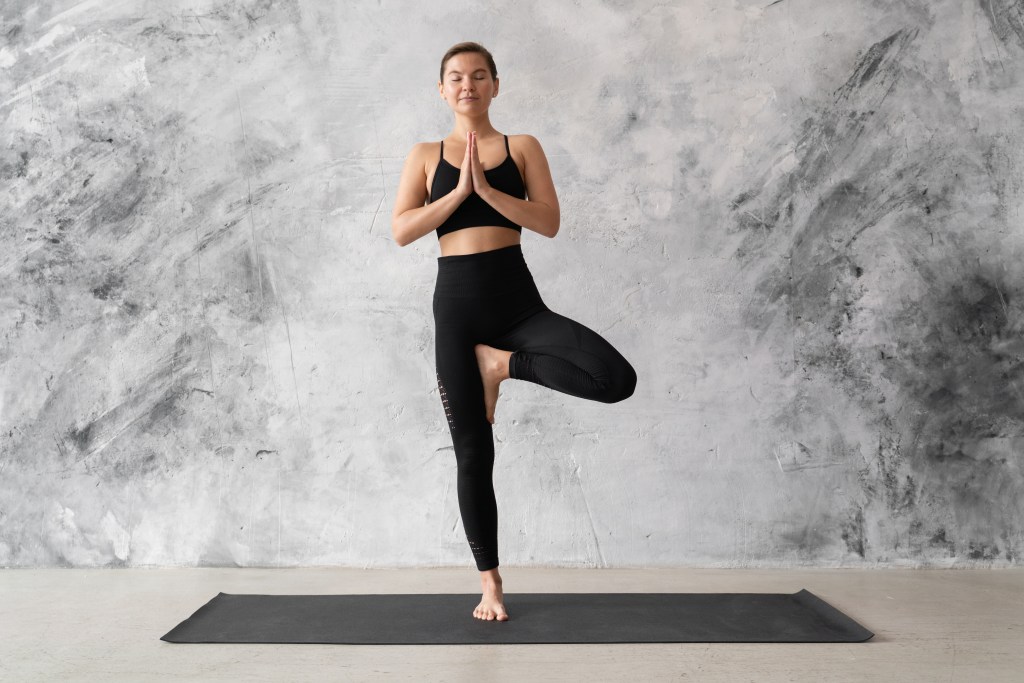
1. Tree Pose (Vrikshasana)

Okay, picture this: you’re standing on one leg, trying not to topple over while balancing your mental to-do list. Welcome to Tree Pose. This posture forces you to focus because if your mind wanders, you’ll end up wobbling like a palm tree in a storm. Balancing on one leg brings you right back into the present moment, dragging your mind out of its rabbit hole and into the now.

How to do it:

  • Stand tall with your feet together.
  • Shift your weight onto your right foot, lifting your left foot and placing it on your inner thigh (or calf if you’re feeling less adventurous—just avoid the knee).
  • Bring your hands together at your chest or raise them above your head like a tree’s branches.
  • Hold and breathe, focusing on a point in front of you to keep your balance.

Benefits for analytical thinkers: By sharpening concentration and pulling your attention into the present moment, Tree Pose helps you step out of the constant swirl of overthinking and regain clarity. It’s great for grounding yourself when your mind feels like it’s on a runaway train.

2. Eagle Pose (Garudasana)

Next up is Eagle Pose, which is like the “pretzel” of yoga. This one challenges you to wrap your limbs around each other and balance, which—spoiler alert—requires your brain to focus on something other than that random email from last week. The twisty nature of this pose helps you focus on alignment and breath, making it a great way to mentally declutter.

How to do it:

  • Stand tall and bend your knees slightly.
  • Lift your right leg and cross it over your left, wrapping your right foot around your left calf.
  • Cross your arms in front of you, with your right arm under your left, bringing your palms together (or back of hands if they don’t quite meet).
  • Hold and breathe, focusing on balance and breath.

Benefits for analytical thinkers: Eagle Pose works wonders for improving focus and mental clarity by forcing you to tune into your body. And if you’re mentally juggling a million things, this pose reminds you that sometimes it’s okay to untangle those thoughts, one twist at a time.

3. Seated Forward Fold (Paschimottanasana)
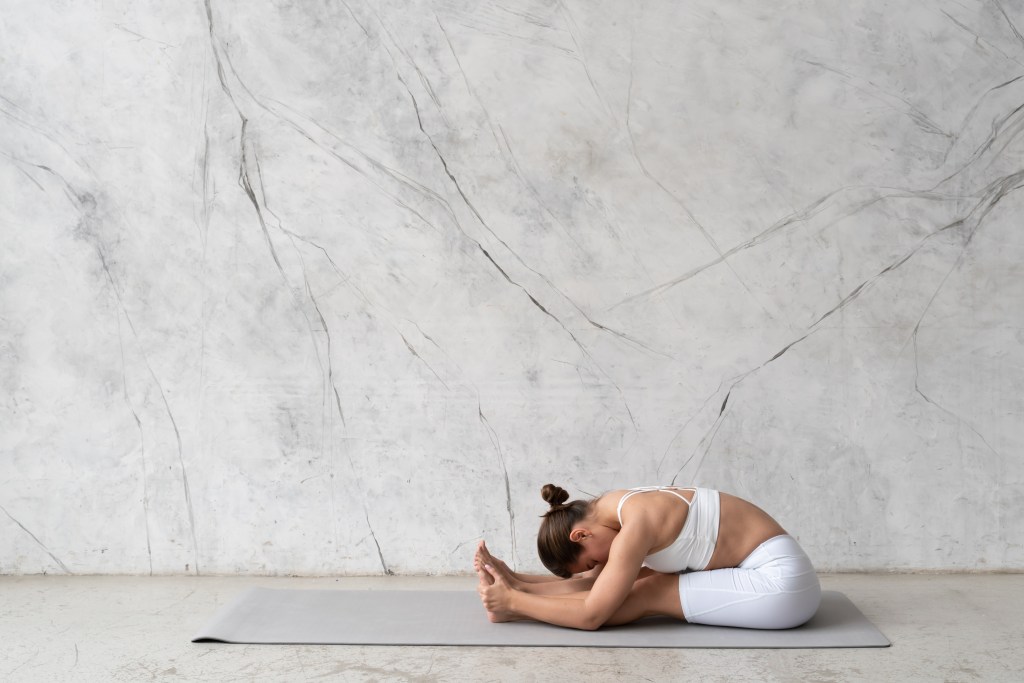
Now, let’s get a little introspective with Seated Forward Fold. This pose is like a warm hug for your brain. You fold forward, stretch out the body, and take a breather—perfect for those moments when your mind is doing Olympic-level overthinking. It’s a simple yet effective way to bring yourself back to center and slow down the mental hamster wheel.

How to do it:

  • Sit on the floor with your legs extended in front of you.
  • Inhale to lengthen your spine, and as you exhale, fold forward from your hips, reaching for your feet.
  • Let your head and neck relax, and breathe deeply.

Benefits for analytical thinkers: Seated Forward Fold calms the nervous system and encourages you to let go—both physically and mentally. It’s a great way to stretch out and reset when you’ve been in your head too long.

Breathing Techniques for Mental Clarity and Focus

1. Nadi Shodhana (Alternate Nostril Breathing)
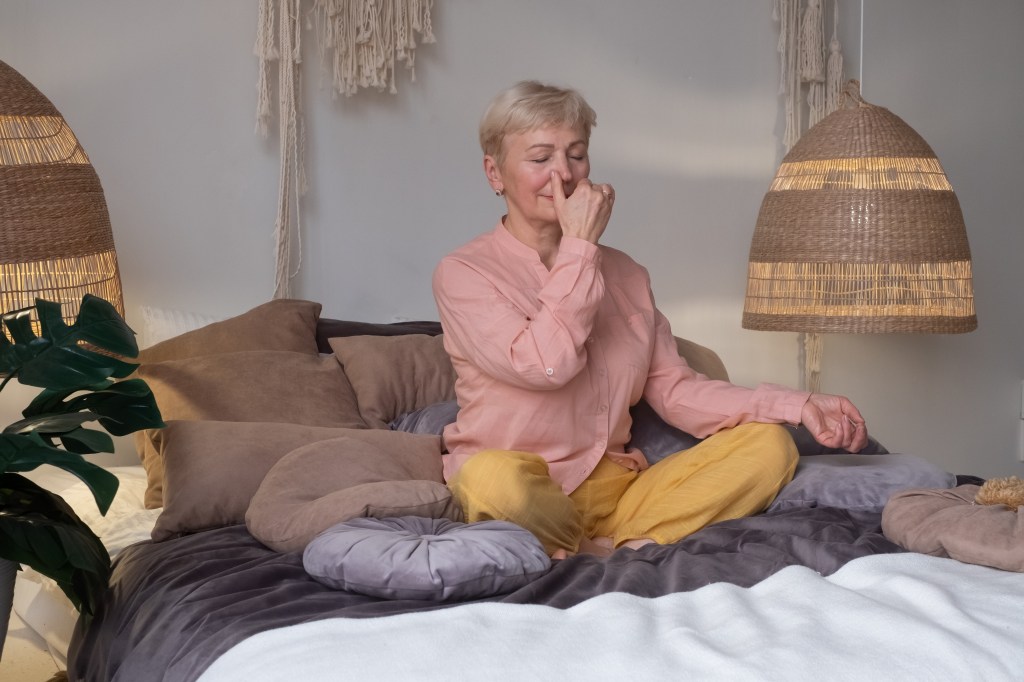
I know we’ve talked about Nadi Shodhana before, but it deserves a spot here because it’s a lifesaver for calming a busy mind. By balancing the breath between both nostrils, you also balance the brain’s hemispheres—meaning you’ll feel a little less “all over the place” and a little more in sync.

How to do it:

  • Sit comfortably with your spine straight.
  • Use your right thumb to close your right nostril.
  • Inhale through your left nostril.
  • Close your left nostril with your ring finger, release your right, and exhale through your right nostril.
  • Inhale through your right nostril, close it, and exhale through the left.
  • Repeat for 5-10 rounds.

Benefits for analytical thinkers: This breathing technique is like a mental reset button. It clears out the clutter and helps you find focus, clarity, and calm, making it perfect for overthinkers who need to hit “pause” on the endless mind chatter.

2. Bhramari (Bee Breath)
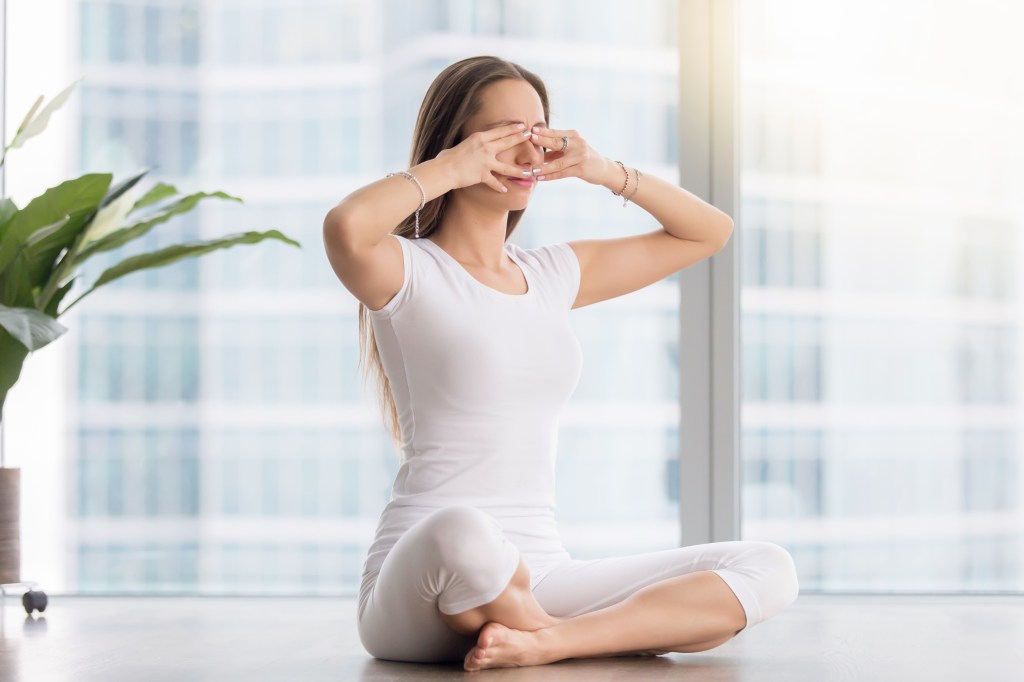
Let’s be real—sometimes your mind just won’t shut up, and that’s where Bhramari, or Bee Breath, comes in. It’s one of the quickest ways to quiet mental noise. The gentle humming sound you make during this practice soothes the nervous system and helps reduce anxiety.

How to do it:

  • Sit comfortably and close your eyes.
  • Place your thumbs over your ears and gently rest your fingers on your eyelids (optional).
  • Inhale deeply, and as you exhale, make a humming sound like a bee.
  • Focus on the vibration in your head and throat.
  • Repeat for 5-7 breaths.

Benefits for analytical thinkers: Bee Breath is like a gentle massage for your brain. It helps calm an overactive mind, reduces anxiety, and clears mental tension—perfect for those days when you can’t stop replaying that awkward conversation from three days ago.

Final Thoughts

If you’re an analytical thinker, yoga and pranayama (breathwork) can be your secret weapon for finding focus and reducing stress. Poses like Tree Pose and Eagle Pose challenge you to focus, while breathing techniques like Nadi Shodhana and Bee Breath clear mental clutter and bring clarity. Yoga offers more than just physical benefits—it’s a way to reset the mind and calm the constant overthinking.

So, the next time your mind won’t quiet down (whether due to a full moon or just the general chaos of life), give these poses and breathing techniques a try. And if all else fails, you can always blame it on the birds outside.

Tags: #YogaForFocus, #MindBodyConnection, #RationalSpirituality, #MentalHealth, #CalmMind, #ClarityThroughYoga, #StressRelief

The Four Dharma Principles for Peace and Clarity

In 2016, I found myself lying on my bathroom floor, utterly spent from yet another round of chemo. I was somewhere between exhaustion and sheer determination. I started listening to Yoga and the Dark Night of the Soul by Simon Haas on Audible. As I have already mentioned, I was searching for anxiety antidotes. That book opened the door to new possibilities. A new way of thinking and over time, a new way of being. Soon enough, I had The Book of Dharma lined up. It was set to be my next dose of inspiration.

As the YogiCFO, I aim to balance Dharma and Data. I thought now is a good time to introduce Dharma.

I was drawn to yoga when I heard it described as the “Science of the Mind.” This wasn’t about blind faith or dogma. It was about trying things out and seeing what worked. I kept only what resonated with me. That same spirit of experimentation drew me to dharma. In ancient Indian texts, dharma was the set of principles used to guide sovereigns in ruling wisely. And, after facing cancer, I came to realize I was my own “sovereign” in the truest sense. Cancer made one thing clear: every choice I made came with consequences, and only I could walk that journey. I wanted my decisions to be rooted in wisdom, not fear. I realised life was short, and prior to this, I was not really fulfilling my potential.

For me, dharma has been less of a rulebook and more of a compass, as Simon Haas describes it. It’s a way to navigate life with purpose by holding close four principles: Truth, Purity, Non-Violence, and Discipline. I’m not here to tell anyone else how to live. I can say that these principles have offered me a lifeline when I needed one. Through the storms of cancer treatment and chronic pain, facing the haunting fears of recurrence, and learning to find peace in solitude, dharma has been a gentle guide back to myself. Here’s how each principle has shown up for me.


Truth: The Art of Being Honest with Myself

Truth sounds straightforward, right? Just be honest. But after a cancer diagnosis, honesty takes on a new level. I convinced myself for a while that I was okay, that I was moving forward without fear. But if I was honest, I was living with a constant, nagging worry about recurrence. Truth, I learned, isn’t about pretending to be fearless or always having it together—it’s about admitting when I don’t.

These days, Truth means being real about my fears and not burying them under a mask of “I’m fine.” Sometimes, that’s admitting I’m scared or that I’m not okay. By acknowledging what’s really going on, I can acknowledge it, notice how it makes me feel and let it go. Truth, as it turns out, has been a source of freedom for me. It allows space for the parts of myself that need compassion. This is much better than denial.


Purity: Clearing Out the Clutter to Find Peace

Purity isn’t about some impossible level of perfection; it’s about clarity. For me, this principle became vital as I learned to manage chronic pain. Pain is exhausting—mentally, emotionally, physically. If I let my mind fill up with resentment, it only worsens the situation. Adding frustration is like fueling an already intense fire.

So, Purity for me is about letting go of that mental clutter and simplifying. I make time each day to clear my thoughts through meditation or writing. I let go of the “extras” that don’t serve me. Even physically, I’ve pared down my space to include only things that bring some peace or joy. Creating this clarity doesn’t make the pain go away. However, it allows me to be present with it. Instead of getting lost in the fog of frustration, I can face it directly. When I keep things clear, I feel a bit more in control. I feel this way even when the pain is out of my hands.


Non-Violence: Treating Myself with Kindness (and Forgiving the Not-So-Great Days)

Non-Violence, or Ahimsa, has been a real journey. It’s about compassion, both toward others and myself. This hasn’t come easily for me, especially when it comes to loneliness. Loneliness can make even the most grounded person feel off-kilter. But I’ve found that when I practice Non-Violence toward myself, I can transform loneliness into solitude. Solitude becomes a place where I can grow and find meaning instead of just feeling isolated.

Some days, that means I let myself rest rather than pushing through. Other days, it’s letting myself feel what I’m feeling without layering on guilt or criticism. And yes, some days it’s as simple as reaching out to a friend. I don’t have to sit with the feeling that I need to do it all alone. Non-Violence reminds me that I deserve kindness, even on the hardest days. This is one of the most powerful lessons I’ve found in dharma.


Discipline: Showing Up for Myself, No Matter What

Discipline used to feel rigid, all about self-control and willpower. But these days, discipline feels softer, like a commitment to myself. After cancer, I needed to rebuild my routines, to show up in ways that nurtured rather than depleted me. Discipline became my way of finding stability in the chaos.

Keeping a bedtime routine, doing my yoga, or sticking to my morning tea ritual are acts of discipline. They remind me I’m worth the effort. The small choices matter. Each one builds on the other. They create a foundation I can rely on even when life throws a curveball. Discipline isn’t about being harsh with myself. It’s about staying consistent with the things that help me feel grounded and whole. Over time, discipline enables freedom.


Living by Dharma as a Gentle Guide

As Haas explains, Dharma isn’t about rules. It’s more of a framework, a gentle guide that brings clarity and helps me focus on what really matters. I’m not here to preach. I won’t tell anyone else what to do. These four principles have offered me something I desperately needed: a way to live with intention. They help me stay present, choose peace over chaos, and show myself some compassion in the process.

The real beauty of dharma is that it doesn’t demand perfection. Some days I’ll nail it, and other days? Well, we all have those days. I realign with Truth, Purity, Non-Violence, and Discipline. Then I feel like I’m steering my life more purposefully. Life won’t ever be perfectly smooth. However, it feels a little lighter. It feels a little clearer. Life becomes much more manageable when I have these principles as my compass.


Finding Your Own Path

As Simon Haas explains, the power of dharma truly shines when all four principles—Truth, Purity, Non-Violence, and Discipline—work together, supporting each other to create a balanced and purposeful life. Each principle reinforces the others, guiding us to make choices with integrity, clarity, compassion, and commitment. If you’re curious about dharma, try engaging with each principle in small, manageable ways, observing how they resonate and complement each other in daily life. Or, you could read the book! The Book Of Dharma

You don’t need to dive in all at once; just allow these principles to be gentle reminders, guiding you towards choices that feel aligned. And if you feel like sharing, I’d love to hear how these ideas shape your journey. What practices or perspectives help you navigate your own path? Drop a comment below—I’d love to learn from your experiences, too. After all, we’re all finding our way, one choice at a time.