The Four Dharma Principles for Peace and Clarity

In 2016, I found myself lying on my bathroom floor, utterly spent from yet another round of chemo. I was somewhere between exhaustion and sheer determination. I started listening to Yoga and the Dark Night of the Soul by Simon Haas on Audible. As I have already mentioned, I was searching for anxiety antidotes. That book opened the door to new possibilities. A new way of thinking and over time, a new way of being. Soon enough, I had The Book of Dharma lined up. It was set to be my next dose of inspiration.

As the YogiCFO, I aim to balance Dharma and Data. I thought now is a good time to introduce Dharma.

I was drawn to yoga when I heard it described as the “Science of the Mind.” This wasn’t about blind faith or dogma. It was about trying things out and seeing what worked. I kept only what resonated with me. That same spirit of experimentation drew me to dharma. In ancient Indian texts, dharma was the set of principles used to guide sovereigns in ruling wisely. And, after facing cancer, I came to realize I was my own “sovereign” in the truest sense. Cancer made one thing clear: every choice I made came with consequences, and only I could walk that journey. I wanted my decisions to be rooted in wisdom, not fear. I realised life was short, and prior to this, I was not really fulfilling my potential.

For me, dharma has been less of a rulebook and more of a compass, as Simon Haas describes it. It’s a way to navigate life with purpose by holding close four principles: Truth, Purity, Non-Violence, and Discipline. I’m not here to tell anyone else how to live. I can say that these principles have offered me a lifeline when I needed one. Through the storms of cancer treatment and chronic pain, facing the haunting fears of recurrence, and learning to find peace in solitude, dharma has been a gentle guide back to myself. Here’s how each principle has shown up for me.


Truth: The Art of Being Honest with Myself

Truth sounds straightforward, right? Just be honest. But after a cancer diagnosis, honesty takes on a new level. I convinced myself for a while that I was okay, that I was moving forward without fear. But if I was honest, I was living with a constant, nagging worry about recurrence. Truth, I learned, isn’t about pretending to be fearless or always having it together—it’s about admitting when I don’t.

These days, Truth means being real about my fears and not burying them under a mask of “I’m fine.” Sometimes, that’s admitting I’m scared or that I’m not okay. By acknowledging what’s really going on, I can acknowledge it, notice how it makes me feel and let it go. Truth, as it turns out, has been a source of freedom for me. It allows space for the parts of myself that need compassion. This is much better than denial.


Purity: Clearing Out the Clutter to Find Peace

Purity isn’t about some impossible level of perfection; it’s about clarity. For me, this principle became vital as I learned to manage chronic pain. Pain is exhausting—mentally, emotionally, physically. If I let my mind fill up with resentment, it only worsens the situation. Adding frustration is like fueling an already intense fire.

So, Purity for me is about letting go of that mental clutter and simplifying. I make time each day to clear my thoughts through meditation or writing. I let go of the “extras” that don’t serve me. Even physically, I’ve pared down my space to include only things that bring some peace or joy. Creating this clarity doesn’t make the pain go away. However, it allows me to be present with it. Instead of getting lost in the fog of frustration, I can face it directly. When I keep things clear, I feel a bit more in control. I feel this way even when the pain is out of my hands.


Non-Violence: Treating Myself with Kindness (and Forgiving the Not-So-Great Days)

Non-Violence, or Ahimsa, has been a real journey. It’s about compassion, both toward others and myself. This hasn’t come easily for me, especially when it comes to loneliness. Loneliness can make even the most grounded person feel off-kilter. But I’ve found that when I practice Non-Violence toward myself, I can transform loneliness into solitude. Solitude becomes a place where I can grow and find meaning instead of just feeling isolated.

Some days, that means I let myself rest rather than pushing through. Other days, it’s letting myself feel what I’m feeling without layering on guilt or criticism. And yes, some days it’s as simple as reaching out to a friend. I don’t have to sit with the feeling that I need to do it all alone. Non-Violence reminds me that I deserve kindness, even on the hardest days. This is one of the most powerful lessons I’ve found in dharma.


Discipline: Showing Up for Myself, No Matter What

Discipline used to feel rigid, all about self-control and willpower. But these days, discipline feels softer, like a commitment to myself. After cancer, I needed to rebuild my routines, to show up in ways that nurtured rather than depleted me. Discipline became my way of finding stability in the chaos.

Keeping a bedtime routine, doing my yoga, or sticking to my morning tea ritual are acts of discipline. They remind me I’m worth the effort. The small choices matter. Each one builds on the other. They create a foundation I can rely on even when life throws a curveball. Discipline isn’t about being harsh with myself. It’s about staying consistent with the things that help me feel grounded and whole. Over time, discipline enables freedom.


Living by Dharma as a Gentle Guide

As Haas explains, Dharma isn’t about rules. It’s more of a framework, a gentle guide that brings clarity and helps me focus on what really matters. I’m not here to preach. I won’t tell anyone else what to do. These four principles have offered me something I desperately needed: a way to live with intention. They help me stay present, choose peace over chaos, and show myself some compassion in the process.

The real beauty of dharma is that it doesn’t demand perfection. Some days I’ll nail it, and other days? Well, we all have those days. I realign with Truth, Purity, Non-Violence, and Discipline. Then I feel like I’m steering my life more purposefully. Life won’t ever be perfectly smooth. However, it feels a little lighter. It feels a little clearer. Life becomes much more manageable when I have these principles as my compass.


Finding Your Own Path

As Simon Haas explains, the power of dharma truly shines when all four principles—Truth, Purity, Non-Violence, and Discipline—work together, supporting each other to create a balanced and purposeful life. Each principle reinforces the others, guiding us to make choices with integrity, clarity, compassion, and commitment. If you’re curious about dharma, try engaging with each principle in small, manageable ways, observing how they resonate and complement each other in daily life. Or, you could read the book! The Book Of Dharma

You don’t need to dive in all at once; just allow these principles to be gentle reminders, guiding you towards choices that feel aligned. And if you feel like sharing, I’d love to hear how these ideas shape your journey. What practices or perspectives help you navigate your own path? Drop a comment below—I’d love to learn from your experiences, too. After all, we’re all finding our way, one choice at a time.

Finding Balance with Yoga: From Cacti to Clarity

Let me start by saying that this post was going to be a straightforward guide on using yoga to cultivate focus and clarity—until my garden decided to turn into an unexpected training ground for patience and resilience. So, let me share a little story with you, and I promise we’ll get to the yoga soon!

The Great Cactus Incident

This past Saturday, I was blissfully weeding my garden (which, by the way, was designed by my “earth angel” friend who has transformed my yard into a small paradise). I was decked out in protective gear: hat, sunglasses, gloves, boots—the full “don’t mess with me” garden look. Apparently however, one rogue cactus didn’t get the memo. I felt a sharp pain in my left knuckle, and sure enough, when I took off my glove, there was a tiny hair-like spike lodged in my skin. I shrugged it off, removed the spike, and went on with my day, feeling accomplished.

Fast forward to the afternoon, still in the garden, pulling weeds when I realized my hand refused to cooperate. It wouldn’t even close around the weeds. Instead, it opted for these spasms, making it feel like my hand had a mind of its own. Even then, I thought, Well, that’s odd, but carried on, totally missing the connection to my cactus encounter. That night, I had a strange dream where I was convinced I must have punched someone—my hand was throbbing, red, and swollen. I woke up in a haze, only to find that it wasn’t just a dream: my hand was doing its best impression of a balloon animal, complete with a lovely shade of red.

After six hours in the emergency department (an x-ray, ultrasound, tetanus shot, and a round of IV antibiotics later), it turns out that my cactus friend had managed to inject some kind of poison right into my tendon. I left the hospital with my hand wrapped in a compression bandage, feeling like I’d survived a battle. And, thanks to the antibiotics and lack of sleep, I now find myself trying to recover from the aftermath of a migraine and restore some balance.

So, this post is now dedicated to sharing exactly what I’m doing to get back to my center. If your mind or body is out of balance—whether from a cactus attack, a stressful week, or just life’s usual chaos—these yoga poses can be a gentle way to bring you back.


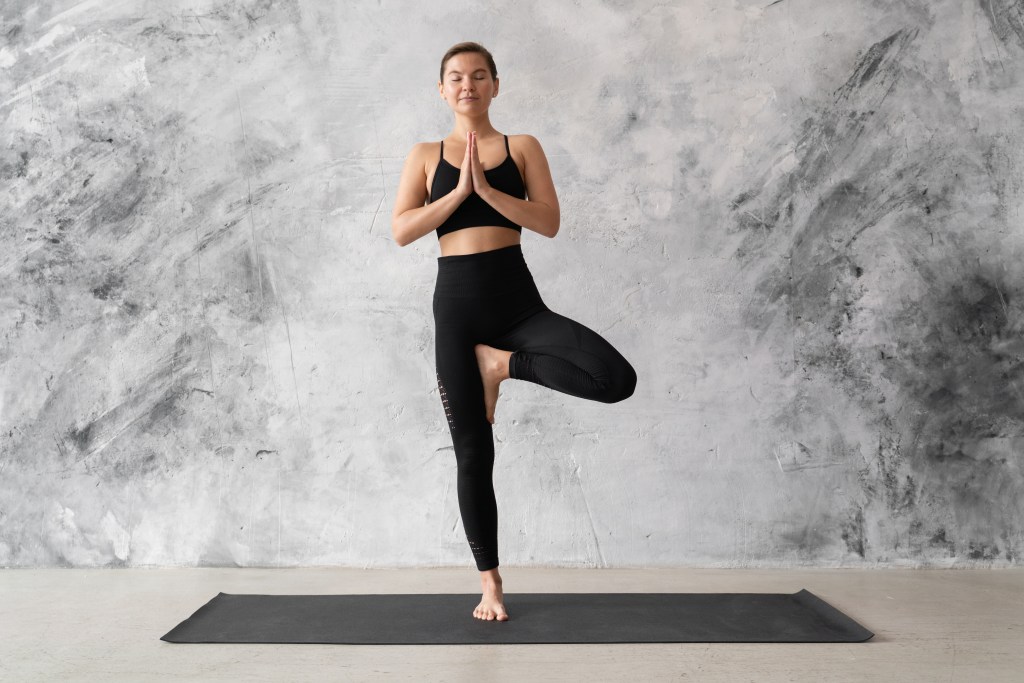
1. Tree Pose (Vrksasana): For When You Need to Feel Grounded

Let’s start with a pose that literally requires you to root yourself in one place—something I wish I’d done around that cactus. Tree Pose helps cultivate balance and focus by asking you to stand on one leg, which, if you’re like me, is sometimes easier said than done.

How to Practice Tree Pose:

  1. Stand with your feet hip-width apart.
  2. Shift your weight onto one leg, pressing that foot firmly into the ground (imagine you’re rooting down—pun intended).
  3. Lift the other foot and place it against your inner thigh or calf, whichever feels stable.
  4. Bring your hands to your heart, or raise them overhead like branches.
  5. Focus on a single point ahead of you to stay balanced and hold for 5-10 breaths. Then switch legs.

Why It Works:

Tree Pose helps focus and steady the mind. For those of us who live in our heads, grounding ourselves physically can calm mental chatter. Plus, it’s an ideal reminder that balance—both physically and mentally—is a work in progress.

When to Use It:

Whenever life has thrown you off balance, quite literally or figuratively, Tree Pose is a great way to find stability. I’d recommend starting your day with this pose, especially when you need to feel grounded.


2. Child’s Pose (Balasana): For Surrendering When Control is Out of Reach

Child’s Pose has saved me from myself on more than one occasion. It’s the ultimate “I surrender” pose, inviting you to let go and let your mind take a backseat. So when you’ve been spiked by a cactus, spent hours in emergency, or are simply feeling overwhelmed, Child’s Pose is the perfect reset button.

How to Practice Child’s Pose:

  1. Kneel on your mat with your big toes touching, knees together or apart (whatever feels better for you).
  2. Fold your torso forward, stretching your arms out in front of you or resting them by your sides.
  3. Rest your forehead on the mat, letting go of any tension in your neck.
  4. Take slow, deep breaths, and stay here for as long as you like.

Why It Works:

This pose calms both body and mind, making it easier to reconnect with yourself. In my case, it’s a way to release my “Why did I mess up?” thoughts and accept that sometimes things happen—spikes and all. Physically, it stretches the back and relieves tension, especially helpful after hours spent tensing up.

When to Use It:

Whenever you need a break from life, take a moment in Child’s Pose. Even just a few minutes can help you shift out of “fight or flight” mode and into a place of rest.


3. Legs Up the Wall (Viparita Karani): For Reversing the Day’s Chaos

Legs Up the Wall is one of those poses that’s almost too good to be true. It requires minimal effort but offers maximum relaxation. For me, it’s a lifesaver after days that make me feel like I’ve been turned upside down—perfect after an emergency room visit or a migraine-inducing experience.

How to Practice Legs Up the Wall:

  1. Sit sideways against a wall, then swing your legs up so they’re resting vertically along the wall.
  2. Lay back, with your arms relaxed by your sides or resting on your belly.
  3. Close your eyes and take slow breaths, letting gravity do the work.
  4. Stay here for 5-15 minutes, or as long as you need.

Why It Works:

By reversing blood flow, this pose helps reduce inflammation and calms the nervous system. It’s especially helpful after a high-stress day, as it gives the brain and body a chance to reset. For those of us who tend to get stuck in overdrive, Legs Up the Wall is like hitting “refresh.”

When to Use It:

Legs Up the Wall is perfect before bed or whenever you need a little mental detox. After my little cactus ordeal, it’s become part of my nightly routine. It helps me unwind and clear out the day’s tension.


Finding Clarity Through Yoga (and Life’s Unexpected Lessons)

Sometimes life throws you a cactus—and sometimes it’s literal. Practising yoga has helped me find clarity. It guides me even in the most chaotic of moments. Yoga reminds me to breathe, stay grounded, and surrender control when needed. These poses are gentle, accessible tools that can bring a little peace and balance to your day.

Ready to Give It a Try?

If you’re finding life a little overwhelming right now (hopefully without the cactus), try one of these poses. Start with Tree Pose in the morning, Child’s Pose when you need a break, and Legs Up the Wall to wind down in the evening. And please, learn from me: stay mindful of those hidden spikes in life’s garden!


Tags: #YogaForFocus #MindBodyBalance #ClarityThroughMovement #HolisticWellBeing


The Balance Between Rationality and Spirituality: Finding My Zen in a Spreadsheet

Hello, lovely readers! Today, we will dive into something that sounds like a contradiction but has somehow become my secret weapon: balancing rationality and spirituality. I know—it sounds like I’m trying to merge a calculator with a meditation cushion. And honestly? I am. But stick with me, because there’s some magic in finding the sweet spot between the two.

Data vs. Dharma: Why Not Both?

For most of my life, I thought I had to choose. I could be rational, data-driven, efficient—crunching numbers and organizing life with spreadsheets, knowing exactly how many grams of protein I ate that day and how many steps I took. Or I could be spiritual—connected, intuitive, meditating in the mornings and practicing yoga at sunset, finding meaning in the flow of life without needing it all quantified.

But then I realized something radical: why not both? Why couldn’t I be the Yogi CFO who finds peace in both a deep breath and a well-organized Excel sheet? And that’s where this journey really began—finding the balance between the data-driven part of me and the spiritual seeker. Because the truth is, rationality and spirituality aren’t opposites—they complement each other beautifully if you let them.

The Mood Tracker That Became My Meditation Partner

Take, for example, my trusty mood tracker. If you’re thinking this sounds like something a Type-A personality would come up with, you’re absolutely right. I wanted to understand my moods, to see if there were patterns, to make sense of the ebb and flow of emotions that seemed to have no rhyme or reason—especially after chemo and the hormonal rollercoaster of early menopause.

So, I made myself a simple mood tracker. Each day, I rated my mood from 1 to 10 and wrote down a few notes about what was happening—stressful work deadlines, a good yoga session, an argument with the toaster (you know, the usual). It wasn’t fancy, but it was honest. And after a few months, I started to notice something: there were patterns. My best days weren’t the ones where everything went perfectly—they were the ones where I had made time for myself, to breathe, to move, to be still.

And that’s when the magic happened. I started integrating my yoga and meditation practices with my data. I noticed that on the days I took even 10 minutes to do some simple breathing exercises—Nadi Shodhana (alternate nostril breathing) or 4-7-8 breath—my mood improved. When I practiced yoga, especially gentle or restorative poses like Legs Up the Wall, I slept better. The data wasn’t just numbers—it was telling me the story of what I needed to feel balanced, whole, and genuinely myself.

Using Data to Deepen Spiritual Practice

You might be thinking, “That’s great, but doesn’t tracking everything take away from the spiritual side?” Surprisingly, no. If anything, it deepened my practice. I found myself using my mood tracker not just to analyze but to reflect. On the days when my mood dipped, I’d ask myself why—and then I’d use that knowledge to make changes. If I saw that I was consistently feeling low after skipping meditation for a few days, it was like a gentle nudge from my data-driven self to get back on the mat.

And when things were going well, the tracker became a celebration of the little wins—a reminder that when I showed up for myself, when I breathed, moved, and connected, it made a difference. The rational side of me loved seeing the trends, and the spiritual side loved the reminder that taking care of myself was, in itself, a form of meditation.

A Practical Example: Bringing It All Together

Here’s how it works in practice: every morning, I start with a few minutes of meditation, just sitting quietly with my breath. After that, I open my mood tracker, rate how I’m feeling, and jot down a few notes—anything from “Slept terribly” to “Feeling grateful for the sunshine.” It’s simple, but it’s powerful.

Then I move. Some days it’s yoga—a gentle flow or some restorative poses. Other days, it’s a walk in the garden or a few stretches while I wait for the kettle to boil. And every week, I look back at my tracker. If I notice a dip, I use it as a cue to ask myself: have I been skipping my meditation? Have I been spending too much time worrying about things I can’t control?

This balance of rationality and spirituality has become my compass. The data helps me see what’s working, what’s not, and where I need to focus. The spiritual practice helps me connect, breathe, and remember that not everything needs to be fixed—sometimes it just needs to be felt.

Tips for Balancing Rationality and Spirituality in Your Life

If you’re ready to give this a try, here are some tips to help you find your own balance:

  1. Start a Simple Tracker: You don’t need an app or anything fancy (although if you have an iPhone, the Health App included has an easy-to-use mood tracker built right in). No smartphone? A notebook will do. Each day, rate your mood from 1 to 10 and write down a few notes—what you did, how you felt, and any significant events. It’s not about over-analyzing; it’s about noticing patterns.
  2. Integrate Breathwork: Try Nadi Shodhana or 4-7-8 breathing. Set aside five minutes each day—morning, evening, whenever you can. Notice how your body feels before and after, and make a note in your tracker. Let the data tell you what works.
  3. Move Mindfully: Yoga is a beautiful bridge between rationality and spirituality. Poses like Legs Up the Wall are easy, restorative, and don’t require you to be flexible or fancy. Just give yourself that time to move and breathe.
  4. Reflect, Don’t Obsess: The goal isn’t to track every detail of your life or to force yourself into rigid routines. It’s about using the information you gather to help you understand yourself better, and to be gentle when things don’t go perfectly.

The Beauty in Balance

Balancing rationality and spirituality isn’t about choosing one over the other. It’s about letting them dance together. It’s using data to help guide your spiritual growth and letting spirituality bring depth and meaning to the numbers. It’s giving yourself the tools to understand and the space to simply be.

So here’s to finding that balance—where the spreadsheet meets the meditation cushion, and where we learn that data and dharma aren’t at odds, but rather two sides of the same beautifully balanced coin.